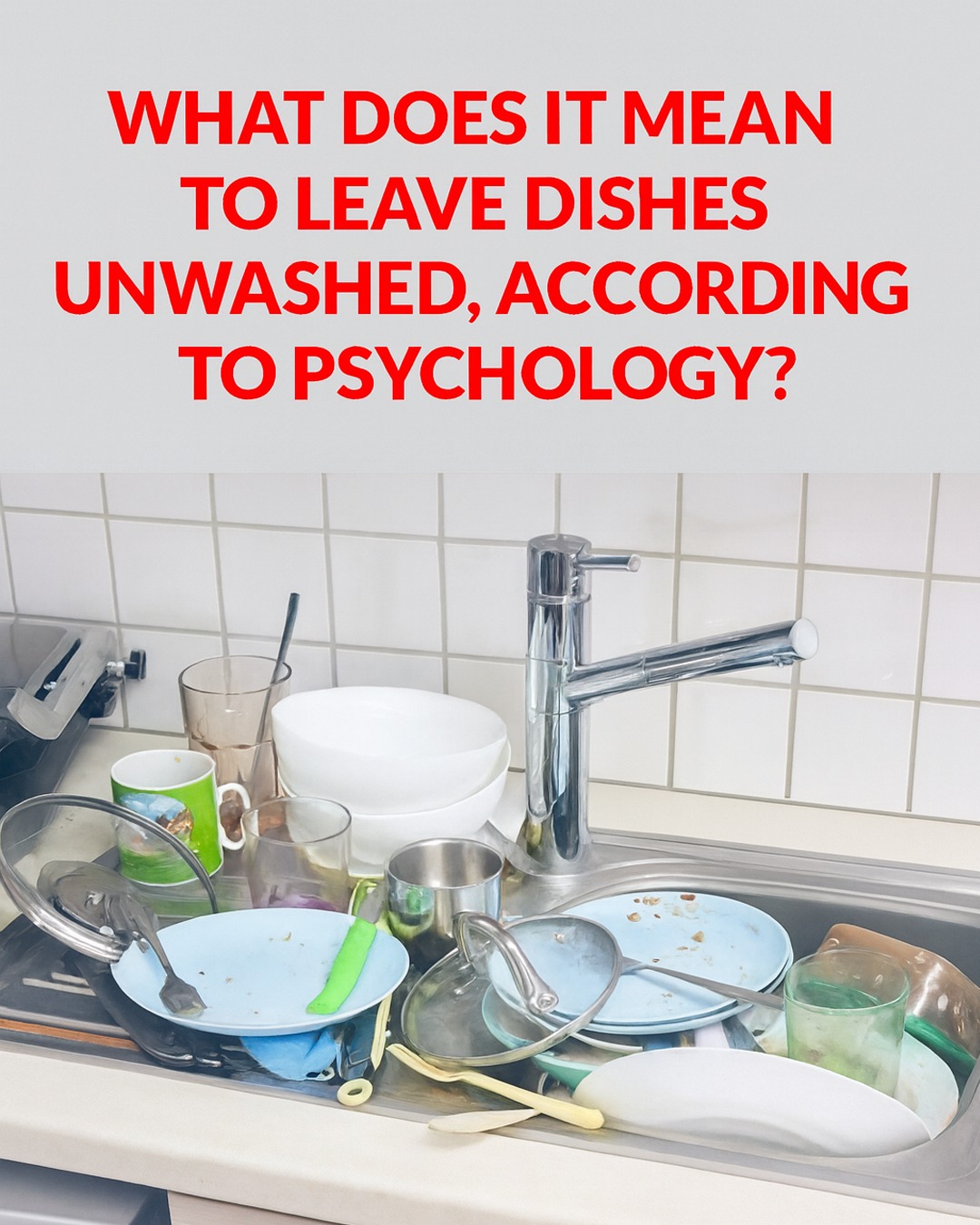
The state of a kitchen sink often serves as a silent barometer for a person’s internal world, reflecting their current levels of stress, exhaustion, or emotional health.
For many, leaving dishes unwashed isn’t a simple act of laziness but a symptom of decision fatigue or mental burnout, where even minor household chores feel like insurmountable hurdles.
Psychologists suggest that a persistent pile-up can also be a manifestation of procrastination or a lack of structured routine, indicating a struggle to prioritize tasks in other areas of life.
In more serious cases, chronic clutter in the kitchen may be an outward sign of depression or anxiety, as the energy required to maintain domestic order is diverted toward basic emotional survival.
Beyond the psychological implications, allowing dishes to accumulate creates a genuine biological hazard within the home. Food residue left at room temperature becomes a prime breeding ground for bacteria and pathogens, which can multiply rapidly in the moist environment of a sink.
This neglect often attracts unwanted pests, such as flies and cockroaches, and leads to persistent, unpleasant odors that can permeate the entire living space. By failing to clear the drain, homeowners inadvertently create a cycle of physical and environmental decay that makes the kitchen—traditionally the heart of the home—an unappealing and unsanitary space to inhabit.
From a cognitive perspective, a cluttered sink adds to an individual’s “mental load,” acting as a visual “to-do” list that triggers feelings of guilt and overwhelm. Every time you walk past a pile of dirty plates, your brain registers an unfinished task, which can increase cortisol levels and reduce overall productivity.
Conversely, the act of washing dishes immediately after a meal can be a form of “micro-meditation” or a small victory that fosters a sense of discipline and self-care. Maintaining a clear workspace reduces visual noise, allowing for a more tranquil and focused mindset that carries over into other daily responsibilities.
Ultimately, keeping the sink clear is about more than just aesthetics; it is an essential component of harmonious co-existence and personal well-being.
In shared households or family environments, the sink is often a primary source of interpersonal conflict, where neglected chores are interpreted as a lack of respect for others’ time and space. By establishing a “clean as you go” rule, you mitigate social tension and improve the overall atmosphere of the home.
Embracing this small habit proves that order in our physical environment often leads to greater clarity in our mental and emotional lives, transforming a mundane chore into a powerful tool for stability.