Have you ever pulled your favorite white t-shirt out of the dryer, only to realize it looks a little… tired? It’s a frustrating moment. You bought it because it was crisp and bright, but now, despite your best efforts, it looks dull, grayish, or has that faint yellow tint.
We usually blame the fabric for “wearing out,” but that isn’t the whole story. The truth is, white clothes don’t just lose their brightness; they get smothered. But you don’t need expensive chemicals to fix it. The solution might already be sitting in your medicine cabinet.
The Science Behind the Suds
Here is why your whites stop looking white. Everyday life leaves behind an invisible layer of “gunk” on your clothes. This includes:
- Body Chemistry: Sweat contains uric acid and natural oils.
- Products: Antiperspirants often leave behind sticky aluminum salts.
- Water Issues: Hard water deposits minerals like calcium into the fibers.
Over time, regular detergent can’t get all of this out. In fact, sometimes detergent residue itself gets trapped in the fabric. This build-up acts like a magnet for dirt, turning your bright whites into a dull gray.
This is where humble Aspirin saves the day.
Aspirin contains salicylic acid. In the world of skincare, this is used to exfoliate. In the laundry room, it does the exact same thing for your clothes. It penetrates deep into the fibers and breaks down the bond between the fabric and the nasty buildup. It essentially “exfoliates” your shirt, stripping away the gray residue so the water can rinse it clean. Think of it as a gentle facial peel for your laundry!
How to Use Aspirin in Your Laundry
Ready to try it? Depending on how bad the stains are, there are three easy ways to use this hack.
Method One: The Routine Refresh (For a Full Load)
This is great for maintenance—keeping your gym clothes, baby onesies, and towels bright before they start to turn gray.
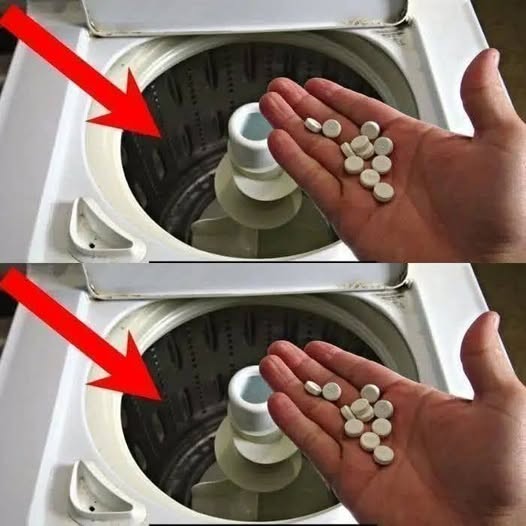
Take 2 to 3 uncoated aspirin tablets (either 81mg or 325mg works).
- Crush them into a powder using a spoon.
- Sprinkle the powder directly into the washing machine drum before you add clothes.
- Add your regular detergent and run a normal cycle.
Pro Tip: Use warm water. It helps the aspirin dissolve faster and activates the acid.
Method Two: The Deep Soak (For Stubborn Stains)
If you have a shirt with yellow armpit stains or a vintage linen tablecloth that looks dingy, this is the heavy-duty method.
Dissolve 5 crushed aspirin tablets in about a gallon of hot water.
- Submerge the stained clothing completely in the water.
- Let it soak for at least 2 hours (or leave it overnight for the best results).
- After soaking, toss it in the washing machine as usual.
Method Three: The Hard Water Booster
If you live in an area with hard water, minerals are your enemy. You can use aspirin as a booster.
Simply mix crushed aspirin into your powdered detergent, or toss a whole tablet into the dispenser drawer. This helps neutralize the minerals that make clothes stiff and dull.
Salicylic acid breaks down oils to reveal the original brightness of the fabric.
Important Safety and Care Notes
While this hack is safe and effective, there are a few rules to follow to protect your clothes and your home:
Go Uncoated: Always buy the cheap, uncoated aspirin. The colored coating on fancy pills can actually dye your clothes!
Watch the Fabric: Avoid using this on delicate proteins like Silk or Wool. The acid can weaken these specific natural fibers.
No Bleach Mixing: Never mix aspirin with chlorine bleach. The chemical reaction can create harmful fumes.
Safety First: Even though it’s for laundry, keep the pills out of reach of children and pets.
Final Thought
Great care lives in the smallest gestures. You do not need expensive stain removers in flashy spray bottles to keep your clothes beautiful. Sometimes, all it takes is a few forgotten pills, a little curiosity, and the willingness to try something the old way.
Real wisdom isn’t loud. It is passed down quietly in folded laundry, in the steady hands of someone who learned from love, and in the simple satisfaction of holding up a shirt that looks brand new after twenty years.