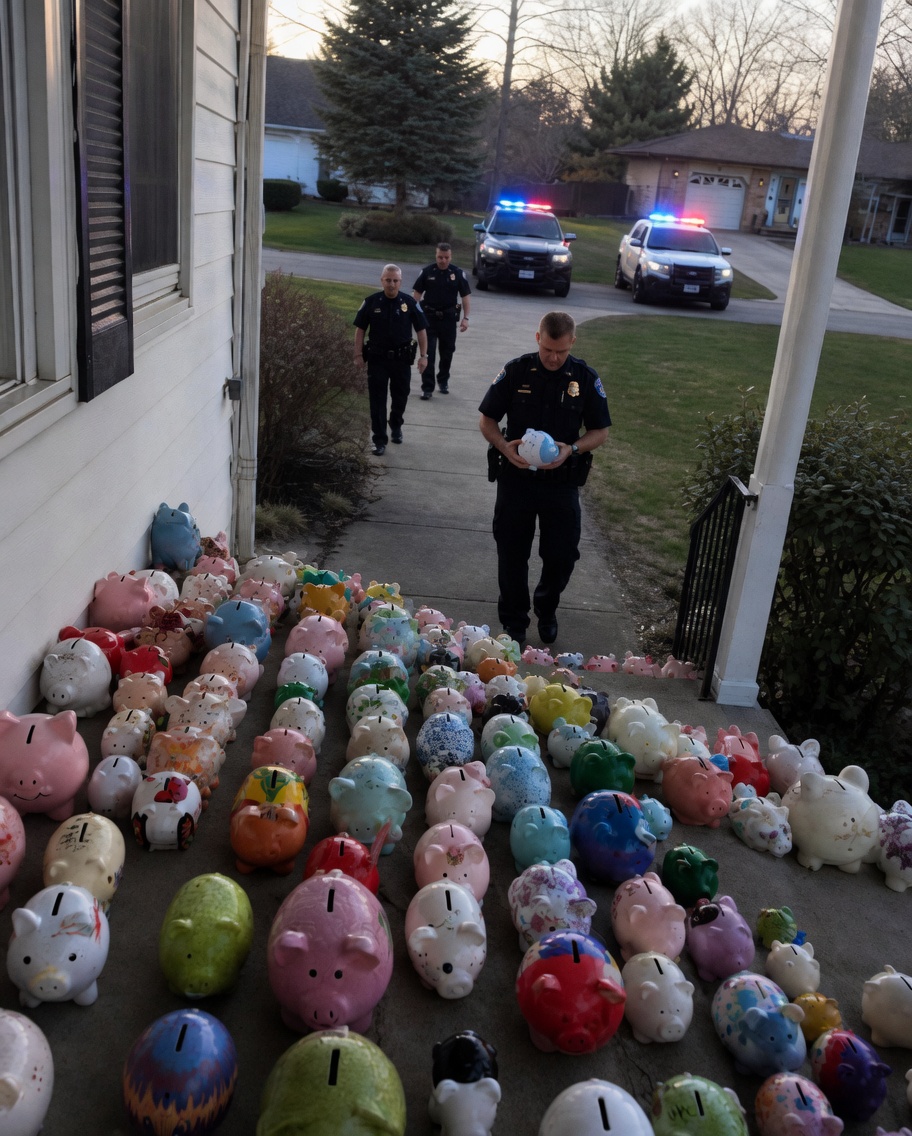
“This is for Ms. Adele,” he said softly, without even looking up.
I knew Ms. Adele the way many people know elderly neighbors — through quick waves, occasional small talk, and vague promises to “check in sometime soon.”
She had lived on our street for years, always quiet and kind, the sort of person who remembered birthdays, brought over cookies for children, and noticed when someone’s garbage bins had not been brought in.
She belonged to the neighborhood in the way older people often do: familiar enough to feel permanent, yet easy to overlook once life becomes busy.
Oliver noticed something the rest of us had stopped seeing. For several nights, her porch light stayed dark. Her windows no longer glowed in the evenings. The little signs of life that quietly reassure a neighborhood had disappeared.
One night while we walked past her house, Oliver tugged at my sleeve and asked why everything was dark. I gave him the easy adult answer at first — maybe she went to bed early, maybe she was away. But children have a way of asking questions without the layers of avoidance adults build around discomfort.
“What if she needs help?” he asked.
So we walked up to her porch.
When Ms. Adele opened the door, I immediately sensed the exhaustion behind her smile. The house felt colder and quieter than it should have. Near the entryway sat a stack of unopened mail and a utility shut-off notice partially hidden beneath it. She noticed me glance toward the papers and gently moved them aside, embarrassed by her own hardship. She insisted she was “managing,” but sometimes people use that word when they are surviving alone for longer than anyone should.

On the walk home, my mind began moving through practical adult solutions: assistance programs, payment plans, grocery deliveries, phone calls. Oliver thought about none of those things. He went straight to his room, dragged out his piggy bank, then returned with another small tin where he kept birthday money. He even added a toy store gift card he had been saving for months.
“She can have it,” he said simply. “She’s old. And she’s alone. And it’s dark.”
I tried explaining that grown-ups would handle it, that his savings belonged to him, that there were other ways to help. But standing there beside him, I realized something uncomfortable: children often understand compassion more clearly before adulthood teaches them to overcomplicate it.
To Oliver, helping someone was not a debate about responsibility, boundaries, or inconvenience. Someone was struggling, so you helped.
The next morning we returned to Ms. Adele’s house. I carried groceries and information about local assistance services. Oliver carried an envelope filled with his carefully counted money. She tried to refuse at first, more wounded by needing help than relieved to receive it. Then Oliver gently pressed the envelope into her hand.
“So your lights can come back,” he whispered.
Something in her expression softened then — not because of the amount of money, but because she realized she had not been forgotten. There is a particular loneliness that comes from feeling invisible, especially for older people who once spent decades caring for everyone else. Oliver’s gift was small in dollars, but enormous in what it communicated: you still matter to us.

What unsettled me most afterward was not the unpaid bill itself. It was how quietly hardship can settle into someone’s life while the people around them stay distracted. Ms. Adele had once been part of the glue that held our street together. Yet when she needed care herself, most of us became too busy to notice the darkness gathering around her home.
But kindness has a way of spreading once someone is brave enough to begin. Other neighbors soon stepped forward. One family organized meals. Someone helped sort her paperwork and arrange automatic payments. Another neighbor offered rides to appointments. Small efforts accumulated into something steady and human. What changed the street was not charity alone. It was attention.
Watching my son empty his savings taught me something I had nearly forgotten as an adult: generosity is not measured by how much we have left over. Often it begins the moment we decide another person’s dignity matters enough to interrupt our routines. Communities do not stay warm by accident. They remain alive because ordinary people keep choosing not to walk past dark porches without asking why.