March brought a bitter chill that cut straight through my clothing as I stood on the back steps of a dark and overgrown property holding a warm pizza box. A delivery note had instructed me to knock loudly, and upon doing so, a weak voice granted me entry into a house that felt significantly colder than the freezing air outside.
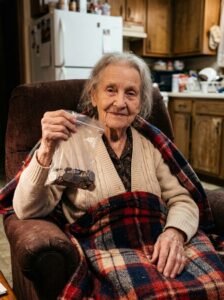
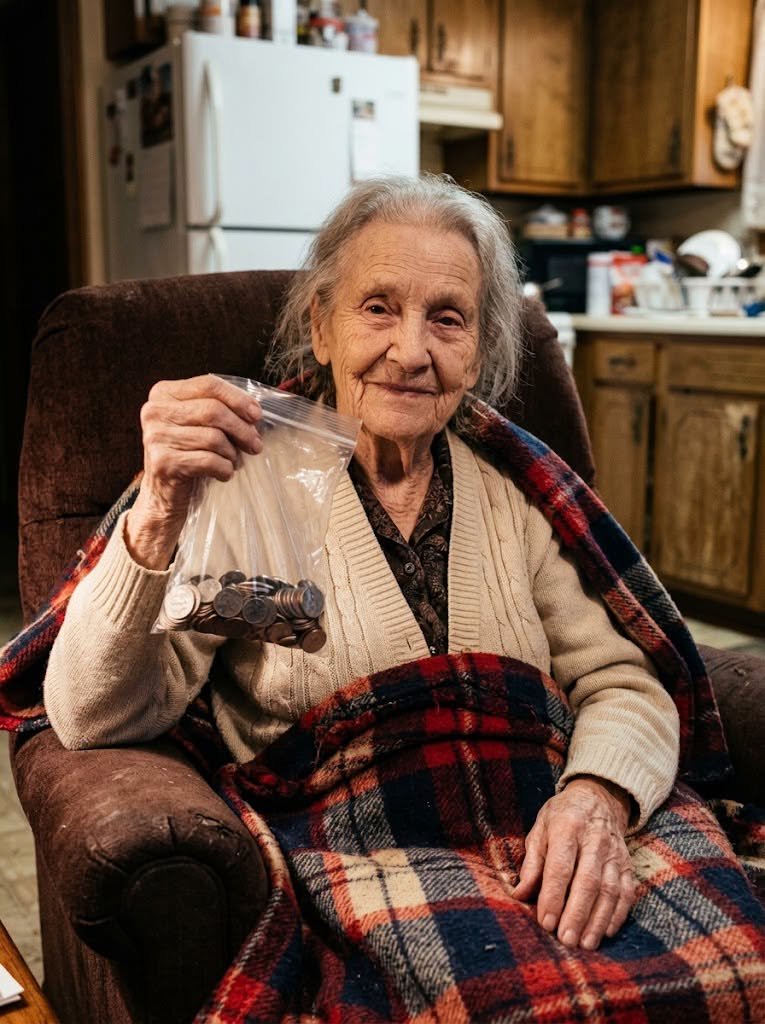
I navigated through a dim kitchen illuminated only by an open refrigerator door that revealed nothing but water bottles and a small pharmacy bag. In the cramped living room, an elderly woman sat huddled in a worn recliner, bundled beneath a mountain of heavy blankets next to a solitary flickering candle.
She explained that she kept her heat turned off because her limited funds had to be prioritized for essential medications. With shaking hands, she pushed a plastic sandwich bag filled with scraped together coins across a small side table to pay for her meal. It became immediately clear to me that this pizza delivery was not a casual treat but rather the only hot food she could manage without the physical strength to cook.
Seeing her prepare to hand over a literal bag of pennies for basic sustenance, I refused to accept her money and told a gentle lie to preserve her dignity. I assured her that the food was completely covered and claimed that I owned the pizza shop so she would not worry about me facing any repercussions from my employer.
She seemed to relax at this assurance, expressing her gratitude before closing her eyes to simply absorb the radiant steam rising from the open cardboard box in her lap. I retreated to my car, but the haunting image of her freezing alone in that dark house paralyzed me behind the steering wheel. I knew I could not simply drive away and pretend everything was perfectly normal.
Taking out my phone, I messaged my dispatch office with a fabricated excuse about a flat tire to buy myself three quarters of an hour. I then started my engine and drove directly to a nearby police station, where I filed a formal request for a welfare check, hoping local authorities could assess her dangerous living conditions.
My initial sense of satisfaction completely vanished when I drove past her address later that night and saw an ambulance with flashing emergency lights parked on the street. Paramedics were actively assisting the frail woman out of her front door while a crowd of curious and defensive neighbors gathered on the icy sidewalk to watch the commotion.
As they guided her toward the vehicle, she locked eyes with me and fiercely accused me of being the sole reason she was being forced out of her home. The medical professionals noted their severe concerns regarding her risk of hypothermia, but she remained terrified and deeply angry that her fragile independence was being stripped away.
The surrounding neighbors immediately turned their hostility toward me, demanding to know what right I had to interfere with a long time resident who they claimed was simply stubborn. I challenged them on their failure to assist a freezing and starving neighbor, but their harsh judgments and the terrifying departure left me feeling entirely responsible for ruining her life.
For an entire week following that fateful delivery, the memory of her accusing face haunted my every shift and made me severely question my decision to intervene. Every dark porch and isolated resident I encountered triggered a deep sense of guilt, making me wonder if I had committed a terrible wrong by imposing my judgment on her private struggles.
Then, my manager handed me a new delivery slip specifically requesting me at that exact same address, and a wave of pure dread washed over my entire body. I slowly walked up the illuminated pathway and knocked on the door, expecting another confrontation, but was instead welcomed inside by a middle aged woman into a remarkably warm and brightly lit home.
The previously bleak living room was now bustling with life, featuring a space heater, completely restocked grocery shelves, and the very same neighbors who had aggressively condemned me just days prior. The elderly woman sat comfortably in her familiar chair, now free of her heavy blankets, happily watching two young neighborhood children playing on the rug at her feet.
The atmosphere shifted as the previously hostile neighbors approached me to offer profound apologies, openly admitting their collective failure to recognize the severity of her declining living conditions. The elderly woman beamed with genuine happiness when she saw me, expressing deep gratitude and apologizing for her initial anger now that hospital staff had explained the fatal risks of her freezing environment.
I learned that the entire neighborhood had mobilized in my absence, organizing a daily visitation schedule and coordinating twice weekly county welfare services to ensure she remained properly fed and appropriately warm. The community took full accountability for their past neglect, leaving no room for excuses, and their unified effort finally silenced the crushing guilt that had been weighing on my conscience.
Looking around that warm and noisy room filled with supportive neighbors and fresh groceries, I realized that doing the right thing often feels terrible in the moment and might even invite intense hatred. However, I learned that interrupting a dangerous illusion of self sufficiency is sometimes the only way to genuinely save a life.