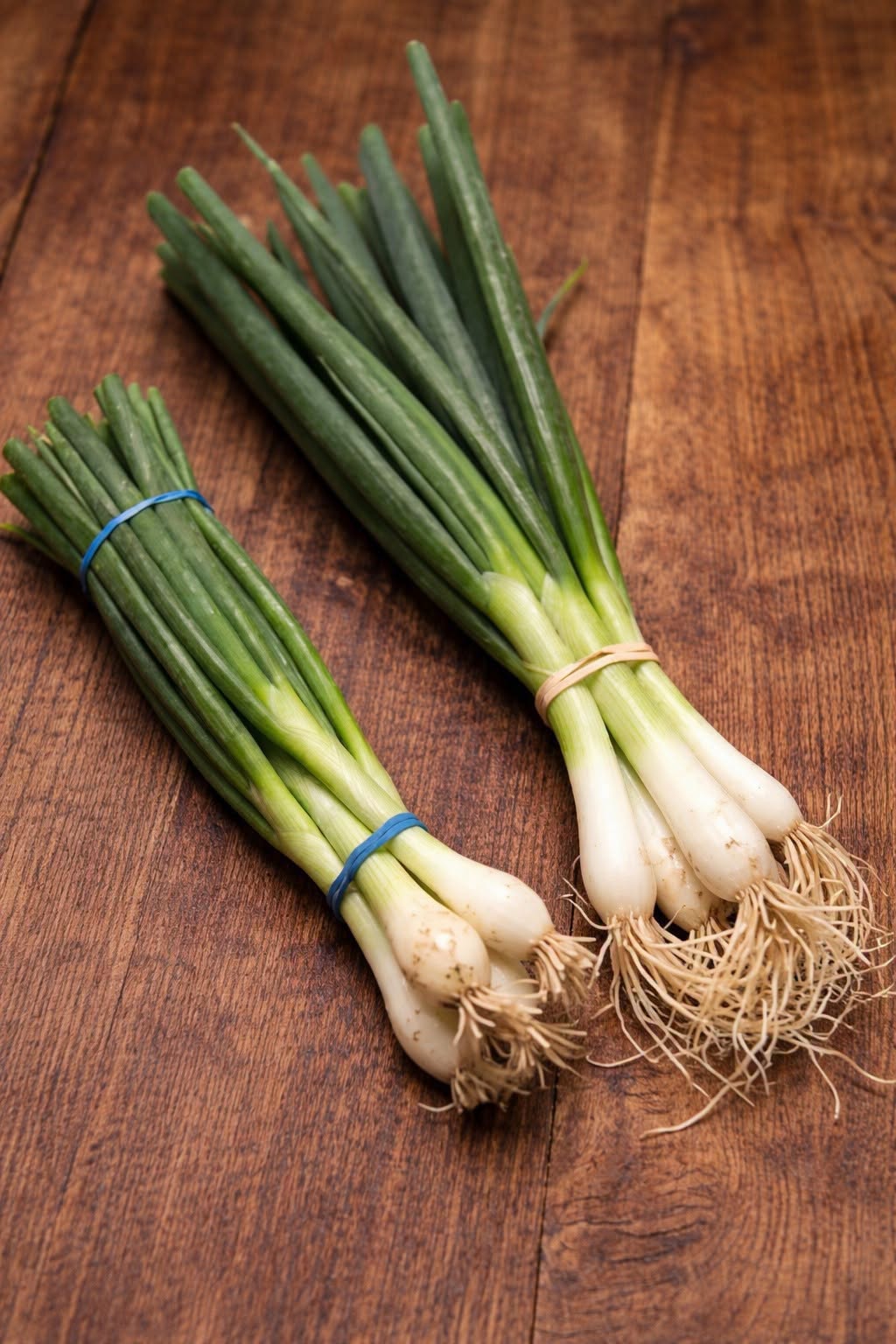
Have you ever stood in the produce aisle wondering whether you’re looking at scallions, green onions, spring onions, or chives?
They may appear almost identical at first glance, but each has its own flavor, texture, and best use in the kitchen. Knowing the difference can make shopping easier and help every recipe turn out even better.
Green onions and scallions are essentially the same vegetable, with the name varying by region. Harvested before a full bulb forms, they have a slim white base and hollow green stalks. Their mild onion flavor makes them perfect for salads, soups, stir-fries, tacos, omelets, baked potatoes, and countless other dishes. Both the white and green parts are edible.
Spring onions are left to grow a little longer, allowing a small bulb to develop. Their flavor is slightly sweeter and richer than scallions, falling between a green onion and a mature onion. The bulb is excellent roasted, grilled, sautéed, or caramelized, while the green tops work well in pasta, rice dishes, casseroles, and as a garnish.
Chives are different because they are herbs, not onion vegetables. They grow as thin, grass-like leaves without a bulb and have a delicate onion flavor. Since heat quickly reduces their taste, they’re best sprinkled over soups, eggs, mashed potatoes, dips, salads, and creamy sauces just before serving.
Although these ingredients belong to the same plant family, each brings something unique to the table. Understanding their differences makes it easier to choose the right one for every meal. The next time you’re in the produce section, you’ll know exactly what to pick—and your cooking will be even more flavorful because of it.