The text message came on a Wednesday afternoon, lighting up my phone screen with what seemed like a simple invitation.
“Why don’t you come over for dinner on Saturday? I’d like to cook something special for you. We can talk peacefully at my place.”
His name was David. He was sixty years old, well-spoken and confident in the way that comes from a lifetime of professional success. We’d been talking for about two months, meeting for coffee a few times, having pleasant conversations that suggested we might actually be compatible.

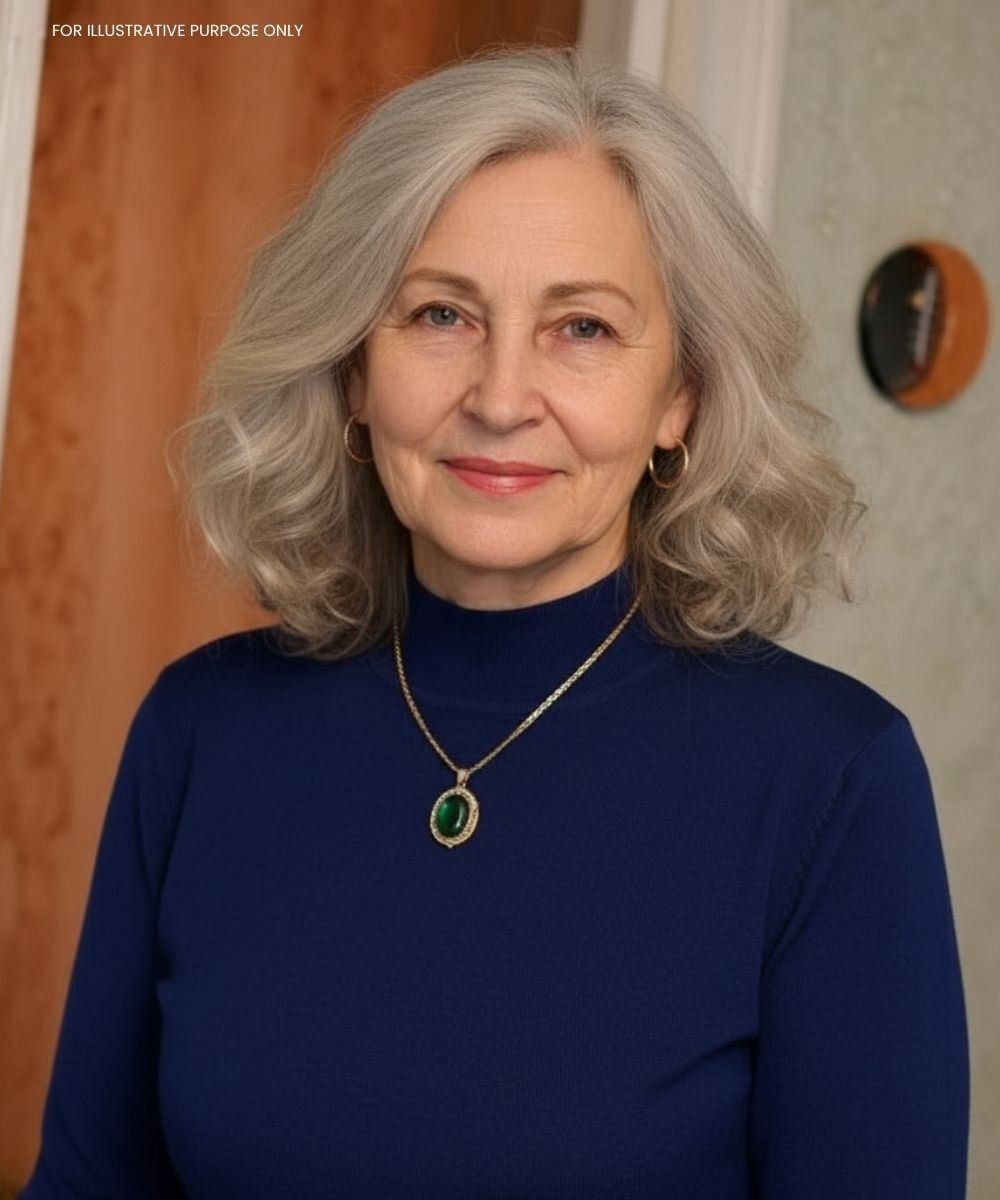
At fifty-eight, I wasn’t new to dating after loss. I’d been widowed three years earlier after a long marriage. My husband had been sick for the final years of his life, and I’d cared for him with everything I had. After he passed, I’d taken time to grieve, to rediscover who I was outside of being a wife and caregiver.
When I’d finally felt ready to consider companionship again, I’d approached it carefully. No rush. No desperation. Just the hope that maybe, somewhere out there, there was someone kind and genuine who wanted partnership, not servitude.
David had seemed promising. He was recently retired from a career in engineering. He spoke thoughtfully about books he’d read and places he’d traveled. He asked questions about my life and seemed to actually listen to the answers.
So when he suggested cooking dinner for me at his home, I took it as a meaningful step forward. A man willing to cook felt thoughtful. It suggested he valued effort and wanted to create something nice for someone he cared about.
I said yes without hesitation.
Preparing for What Should Have Been a Nice Evening
On Saturday, I took care getting ready. Nothing too formal, but a nice dress and careful attention to the details that make you feel confident. I stopped at a specialty chocolate shop and picked out an elegant box of Belgian chocolates as a hostess gift, even though technically he was the host.

My daughter called while I was getting ready.
“Where are you going all dressed up?” she asked.
“David invited me for dinner at his place,” I told her.
There was a pause on the other end of the line.
“Mom, just… be careful, okay? You don’t really know this guy that well yet.”
“It’s just dinner, sweetheart. We’ve been talking for two months. He seems like a good person.”
“I’m sure he is,” she said, but I could hear the protective concern in her voice. “Just text me when you get there and when you leave, okay?”
I promised I would, touched by her care even as I felt certain there was nothing to worry about.
David’s apartment building was in a nice part of town, the kind of well-maintained complex where retired professionals tend to settle. Clean hallways. Well-kept landscaping. Everything suggesting stability and order.
He greeted me at the door with a warm smile, taking the chocolates with what seemed like genuine pleasure.
“You didn’t need to bring anything, but thank you. These look wonderful.”
The living room was spacious and tidy at first glance. Comfortable furniture. Bookshelves lined with volumes that suggested a curious mind. Two wine glasses already set out on the coffee table.
Everything looked perfectly normal.
“Dinner should be ready soon,” he said. “Let me show you the kitchen.”
I followed him, expecting to see pots simmering on the stove, maybe a salad being assembled, the pleasant chaos of someone in the middle of cooking a meal they care about.
Instead, I stopped cold in the doorway.
The sink was overflowing with dirty dishes. Pots, pans, plates, bowls—piled so high that some were balanced precariously on top of others. The counter was covered with groceries still in their bags. Raw vegetables. A package of meat. Rice. Potatoes. All of it just sitting there like someone had carried in shopping bags and then walked away.
Nothing was cooking. Nothing was prepared. Nothing suggested that dinner was anywhere close to ready.
“There,” David said, his voice carrying a note of satisfaction. “Everything’s ready for you.”
I turned to look at him, confusion replacing my earlier optimism.
“Ready for what?” I asked.
The Test I Hadn’t Agreed To Take
David’s expression was calm, almost pleased with himself.
“For real life,” he replied simply. “Look, I’m not interested in casual dating at our age. I’m looking for a wife. A partner. Someone who can handle a real household.”

He gestured toward the disaster in the kitchen.
“I left the dishes dirty on purpose. I bought groceries but didn’t prepare anything. I need to see how you handle a home. Words don’t matter. Talk is easy. But the kitchen tells me everything I need to know about a woman.”
He wasn’t joking. There wasn’t a trace of humor or irony in his voice. He was completely serious.
“I want to see if you can cook,” he continued. “If you know how to organize a kitchen. If you’re the kind of woman who sees work that needs doing and just does it without complaining. That’s what a real partnership is.”
For just a second—maybe two or three seconds—old habits stirred inside me. The instinct to help. To prove myself. To be accommodating and pleasant. To show that I was capable and willing.
Those instincts had been trained into me over a lifetime. Trained by a culture that told women our value lived in service. Trained by decades of actually being a wife and mother, of putting everyone else’s needs before my own, of measuring my worth by how well I took care of other people.
But I’m fifty-eight years old. I’ve raised three children from infancy to successful adulthood. I’ve packed thousands of school lunches and cooked tens of thousands of meals. I’ve cleaned up after sick kids and handled every domestic crisis imaginable.
I’ve cared for a dying husband through two years of illness, managing his medications, his doctor appointments, his declining body and breaking spirit. I’ve held his hand through pain I couldn’t fix and grief I could barely contain.
I’ve done my time. I’ve proven myself a thousand times over.
And that’s exactly why I wasn’t about to start again for a man who thought dirty dishes were a reasonable test of my worthiness.
The Moment I Chose Myself
I looked at David for a long moment, really seeing him clearly for the first time.
“David,” I said, keeping my voice even and calm, “I came here for a date. Not a job interview.”
He looked genuinely confused, like I’d said something that didn’t make sense.
“There’s an apron hanging over there,” he said, pointing to a hook by the refrigerator. “I’d like borscht if you know how to make it. And cutlets. And obviously the dishes need to be cleaned first. I want to see care. I want to see effort. What happens when I’m sick someday and need someone to take care of me? I need to know you’re capable.”
The presumption was breathtaking. The manipulation was so transparent it was almost insulting.
“You don’t need a wife,” I told him, my voice still calm but firm. “You need a housekeeper, a cook, and a nurse all rolled into one person. And you want to pay for that service with the privilege of your company.”
His expression began to harden around the edges.
“You women are all the same,” he said, his tone turning sharp. “You just want men to take you to expensive restaurants. You want to be entertained and pampered. You don’t want to actually contribute anything real.”
“I didn’t apply for employment,” I replied. “I’m not here to prove myself worthy of your approval. I’ve already spent forty years proving myself. I’m done with tests.”
I picked up the box of chocolates I’d brought, the one I’d chosen so carefully.
“Where are you going?” he asked, his voice rising slightly.
“Home,” I said simply. “There’s no dinner here. Just demands disguised as a date.”
“Fine!” he shouted as I walked toward the door. “Go ahead and leave! You’re going to end up alone! No man wants a woman who won’t even cook a simple meal!”
The words were supposed to hurt. They were supposed to make me feel small and scared and desperate enough to turn around and put on that apron.
They were supposed to make me believe that being alone was the worst possible outcome, worse than being used, worse than being tested like livestock at an auction.
But they didn’t hurt.
Because somewhere in the last three years, I’d learned something important…
The words were supposed to wound me. They were designed to trigger fear—the fear of ending up alone that society tells older women should terrify us more than anything else.
But as I stood there in David’s doorway, chocolates in hand and his angry voice echoing behind me, I realized something profound.
I wasn’t afraid of being alone anymore.
I’d been alone for three years since my husband died. And yes, there had been lonely moments. Quiet evenings when I missed having someone to share dinner with. Mornings when I woke up and instinctively reached for someone who wasn’t there.
But I’d also discovered something unexpected in that solitude. I’d found peace. I’d found the freedom to make decisions based entirely on what I wanted, not what someone else needed from me. I’d found joy in small things—reading until midnight without anyone complaining about the light, eating cereal for dinner if I felt like it, traveling to visit my daughter without coordinating schedules with anyone.
Being alone wasn’t the punishment David seemed to think it was.
Being used, however—being reduced to unpaid domestic labor disguised as partnership—that would have been unbearable.
What He Was Really Testing
I walked out of that apartment building and sat in my car for a few minutes before starting the engine. My hands were shaking slightly, not from fear but from the adrenaline of standing up for myself in a way I hadn’t always been able to do when I was younger.
I thought about what had just happened, trying to understand it clearly.
David hadn’t been testing my cooking skills. Any fool could see that. He’d been testing my boundaries. He’d been checking to see if I was the kind of woman who would accept mistreatment if it was packaged as tradition or partnership or “real life.”
If I had put on that apron, if I had washed those dishes and cooked that meal on what was supposed to be our first real date, it would have set the tone for everything that followed.
It would have established that his comfort mattered more than my dignity. That his needs took priority over my time. That I was willing to perform domestic labor to earn his approval and affection.
Every boundary I failed to set on that first evening would have been a boundary I’d have to fight twice as hard to establish later.
I’d learned that lesson the hard way in my marriage. My husband had been a good man in many ways, but I’d spent decades accommodating his preferences, anticipating his needs, making myself smaller so he could be more comfortable. It had started with small things—always cooking his favorite meals, always deferring to his choice of restaurant or movie, always being the one to compromise when we disagreed.
By the time he got sick, the pattern was so deeply established that it never occurred to either of us that anyone else might help with his care. Of course it would be me. Of course I would quit my part-time job to be home full-time. Of course I would handle all the medical appointments and medication schedules and dietary restrictions.
I’d loved him, and I’d cared for him willingly. But I’d also lost myself somewhere in all that service.
I wasn’t willing to lose myself again for someone who thought dirty dishes were an appropriate courtship ritual.
The Text Message I Sent
Sitting in my car outside David’s apartment building, I pulled out my phone and sent a text to my daughter.
“Left early. He’s not the right person. I’m fine. Heading home.”
She responded immediately: “What happened?? Are you okay??”
I smiled at her concern and typed back: “I’m more than okay. I’ll tell you about it tomorrow. Love you.”
Then I sent one more text, this time to David.
I kept it brief and clear:
“I’m looking for a partner, not an employer. I hope you find what you’re looking for. Take care.”
I didn’t expect a response, and I didn’t get one.
What I did get, about an hour after I arrived home, was a phone call from my friend Margaret. She was seventy-two, widowed for a decade, and one of the wisest women I knew.
“I heard from Susan who heard from her cousin that you had an interesting evening,” she said without preamble.
Small town networks are incredibly efficient.
I laughed and told her the whole story—the groceries on the counter, the sink full of dishes, David’s explanation that he was testing me.
Margaret was quiet for a moment after I finished.
“You know what that man wanted?” she finally said. “He wanted a mother. Someone to clean up after him and cook for him and make him feel taken care of without him having to put in any emotional work or genuine partnership. He wanted the benefits of a wife without any of the responsibilities of a husband.”
“That’s exactly what it felt like,” I agreed.
“Good for you for walking out,” Margaret said firmly. “At our age, we don’t have time to waste on men who think we exist to serve them. Life’s too short and we’ve already done too much unpaid labor.”
What Real Partnership Looks Like
Over the next few days, I thought a lot about what I actually wanted in a relationship at this stage of my life.
I wanted companionship. Someone to share experiences with, to talk to about books and ideas, to travel with occasionally. I wanted someone who made me laugh and who appreciated my sense of humor.
I wanted partnership. Someone who understood that a relationship involved two people contributing equally—not one person serving while the other received.
I wanted respect. Someone who valued my time and my capabilities without feeling entitled to them.
I wanted kindness. Someone who was gentle with my heart because they understood how precious it was to trust again after loss.
What I absolutely did not want was another job. Another role where my worth was measured by how well I anticipated and met someone else’s needs while my own needs remained perpetually secondary.
I’d done that job already. For forty years, with dedication and love. I’d raised children and managed a household and cared for a sick spouse and I’d done all of it without complaint because that’s what love looked like to me then.
But I was older now. Wiser. More aware of my own value.
And I knew that real love—real partnership—didn’t require tests or trials or proving yourself worthy through unpaid labor.
The Phone Call That Surprised Me
Three weeks after the disastrous dinner that never happened, my phone rang with a number I didn’t recognize.
I almost didn’t answer it. But curiosity got the better of me.
“Hello?”
“Is this Sarah?” A man’s voice, unfamiliar.
“Yes, who’s calling?”
“My name is Robert. I’m David’s brother. I hope you don’t mind me calling. He gave me your number a while back when he was talking about you, and I… well, I wanted to apologize.”
I was genuinely confused. “Apologize for what?”
“For my brother’s behavior,” Robert said. “I heard what happened. He told the story to our sister like it was funny, like you’d failed some kind of test. She told me, and I was horrified.”
He paused, then continued.
“Our mother died when we were young, and our father raised us alone. He was… very traditional. Very demanding. David learned from him that a woman’s value is in what she does, not who she is. I’ve tried to talk to him about it over the years, but he doesn’t listen.”
“That’s not your responsibility to fix,” I said gently.
“I know. But I wanted you to know that not everyone thinks that way. And I wanted to apologize on behalf of basic human decency, if nothing else.”
We talked for a few more minutes. Robert was thoughtful and kind, genuinely embarrassed by his brother’s behavior. He told me he’d been married for thirty years to a woman he called his best friend, that they’d built a life based on mutual respect and shared responsibility.
“That’s what I hoped David would find,” he said. “But he’s looking for something that doesn’t exist anymore—a 1950s fantasy that wasn’t even real back then.”
After we hung up, I sat with the phone in my hand, thinking about the difference between the two brothers. Same upbringing, same father, same cultural messages. But one had learned and grown and changed, while the other had calcified into rigid expectations.
It reinforced what I already knew: we all have choices about who we become.
The Lesson I Carry Forward
I’m still dating, still open to companionship and partnership. But I’m more selective now. More willing to walk away early when I see red flags.
Because here’s what I’ve learned at fifty-eight:
Being alone is not a failure. It’s not a punishment or a tragedy or something to be avoided at all costs.
Being used, being diminished, being reduced to a role instead of valued as a person—that’s what I want to avoid.
I spent forty years being what other people needed me to be. I was a good mother. I was a devoted wife. I was a caretaker and a homemaker and a thousand other roles that required me to put myself last.
And I did all of it with love. I don’t regret those years or resent the people I served. My children are wonderful adults. My marriage had real love and real partnership, even if the balance wasn’t always equal. My husband’s final years were made easier by my care.
But that chapter is finished.
This chapter—whatever years I have left—belongs to me.
And I won’t spend it washing someone else’s dirty dishes just to prove I’m worthy of basic respect.
The most powerful thing a woman can do, I’ve learned, is know her own value.
And the second most powerful thing she can do is walk away from anyone who doesn’t recognize it.
So that’s what I did.
I walked away from David’s apartment, from his manipulative test, from his assumption that I needed him more than I needed my own dignity.
And I walked toward something better: a life where I get to choose. Where being alone is preferable to being used. Where my worth isn’t measured by my willingness to serve.
That’s not bitterness. That’s not cynicism.
That’s wisdom. Hard-earned and precious.
And I wouldn’t trade it for all the dinner invitations in the world.