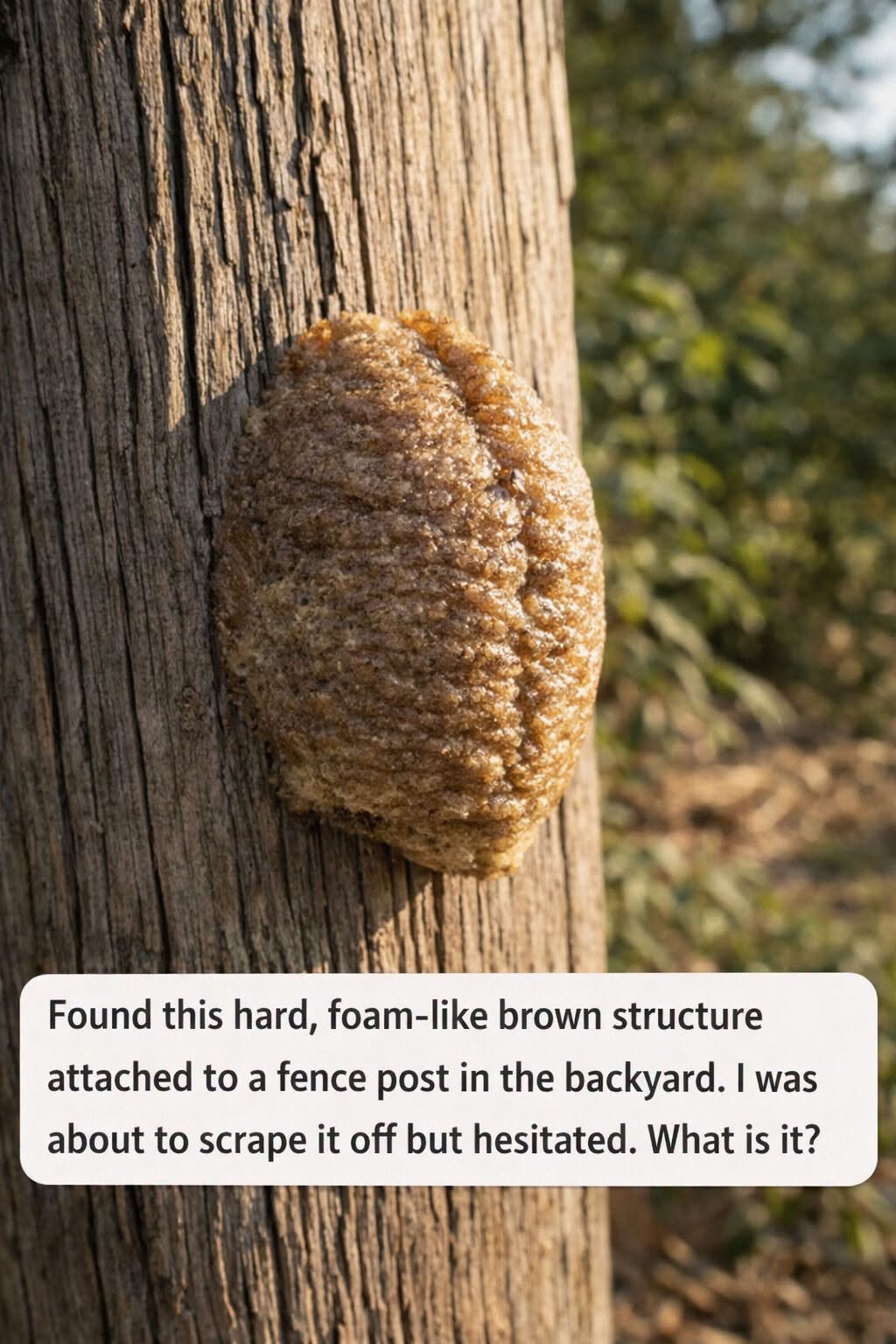
Spotting a strange, brown, foam-like object in your yard can be surprising. Whether it’s attached to a branch, fence, or shrub, it may look unusual or even alarming.
But before you remove it, you should know it’s usually harmless—and it may actually benefit your garden.
The object is often a praying mantis egg case, called an ootheca. In late summer or fall, a female mantis creates this protective case around her eggs.
As it hardens, it shields them from harsh weather and predators throughout the winter. Although it looks small, it can contain hundreds of developing baby mantises.
When spring arrives and temperatures warm, the young mantises hatch and spread into nearby plants. They feed on insects such as aphids, flies, and caterpillars, helping control pests naturally without the need for chemicals. Their presence is often a sign of a healthy garden ecosystem.
If you find an ootheca, it’s usually best to leave it where it is. If it’s in a spot where it could be damaged, carefully move the branch or surface it’s attached to rather than trying to remove the egg case itself.
What first seems like a mysterious object is actually one of nature’s clever survival strategies. By protecting it, you’re giving hundreds of beneficial insects the chance to thrive and helping your garden maintain its natural balance.