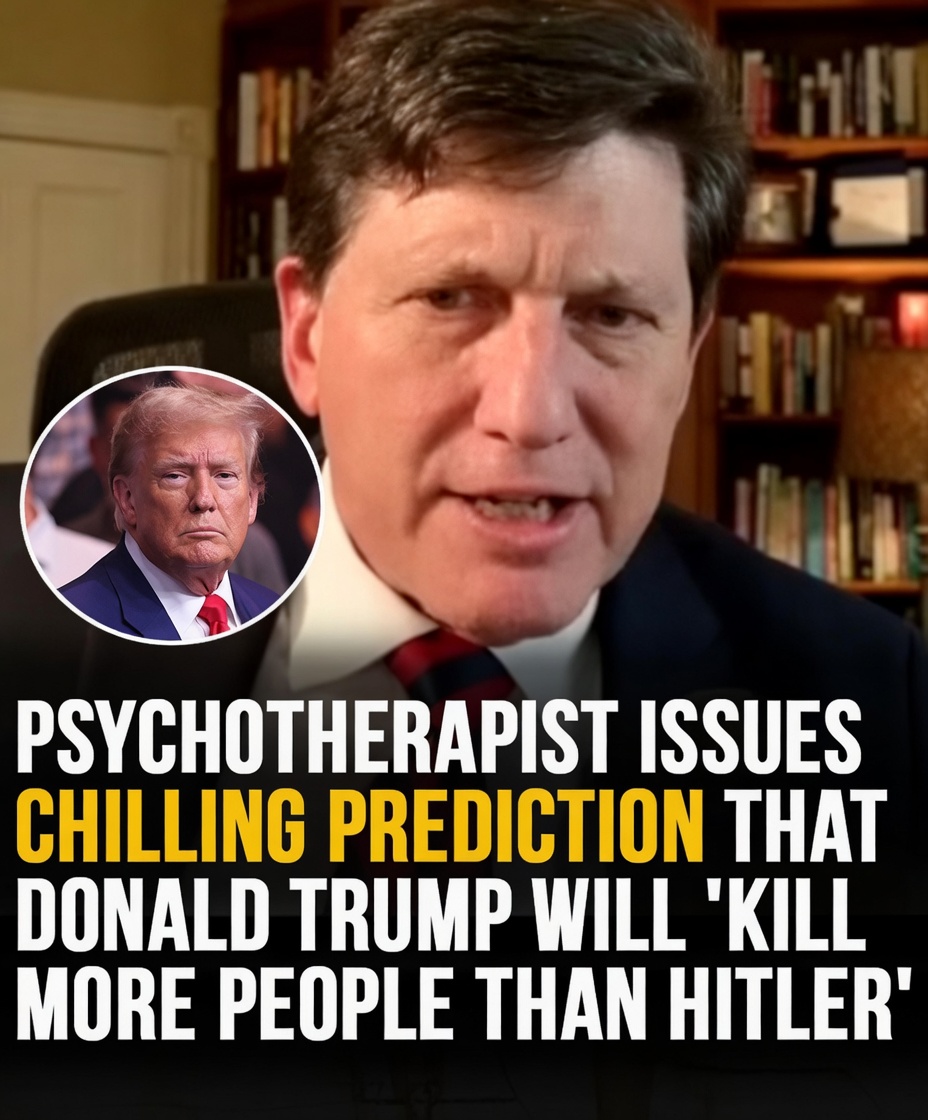
a level of catastrophe exceeding the historical horrors of the twentieth century. Gartner’s assertion—that Trump could ultimately be responsible for more deaths than Adolf Hitler—has ignited a firestorm of controversy, forcing the public to confront an uncomfortable intersection between psychiatric theory and the raw, unbridled power of the presidency.
Gartner’s argument rests on his analysis of Trump’s public behavior, which he describes as a pattern of escalating grandiosity and cognitive instability. By examining recent speeches and social media activity, the psychotherapist points to a recurring theme:
Trump’s frequent comparisons of himself to historical giants like Alexander the Great, Julius Caesar, and even religious figures. To Gartner, these are not just the hallmarks of a standard narcissist, but clear indicators of a mind losing its grip on reality, potentially suffering from a deep-seated cognitive decline that could be catastrophic if paired with the nuclear codes.
The gravity of this warning has split the mental health community down the middle. On one side, professionals like Gartner argue that they have a moral obligation to protect the public from a leader they believe is fundamentally unfit for the responsibilities of the highest office in the land.
They view their silence as complicity, arguing that when a leader’s mental state poses a clear and present danger to global stability, the ethical codes that typically prevent diagnosing public figures from afar must be secondary to the duty of warning the electorate.
Conversely, many in the psychiatric field remain deeply skeptical. Critics argue that diagnosing a political figure without a personal examination is not only scientifically unreliable but fundamentally unethical.

They warn that weaponizing mental health labels to delegitimize political opponents sets a dangerous precedent, turning clinical terminology into just another tool for partisan warfare. This divide leaves the average voter in a precarious position: how does one distinguish between a legitimate clinical alarm and a politically motivated smear?
As the debate intensifies, the core issue remains the terrifying hypothetical scenario Gartner has painted. Whether one views his prediction as a prescient warning or a hyperbolic exaggeration, the conversation itself highlights a profound anxiety about the nature of power in the modern era.
It forces us to ask: at what point does a leader’s psychological state become a matter of national security, and who is qualified to make that call?

Ultimately, the controversy serves as a stark reminder of the fragility of democratic institutions when they are tested by the personalities of those who inhabit them.
As the nation looks toward the future, the question of mental fitness is likely to remain at the forefront of the discourse, challenging every citizen to decide for themselves where the line between political criticism and genuine clinical concern truly lies.