That winter, my eight-year-old son found pure happiness in a small corner of our front yard.
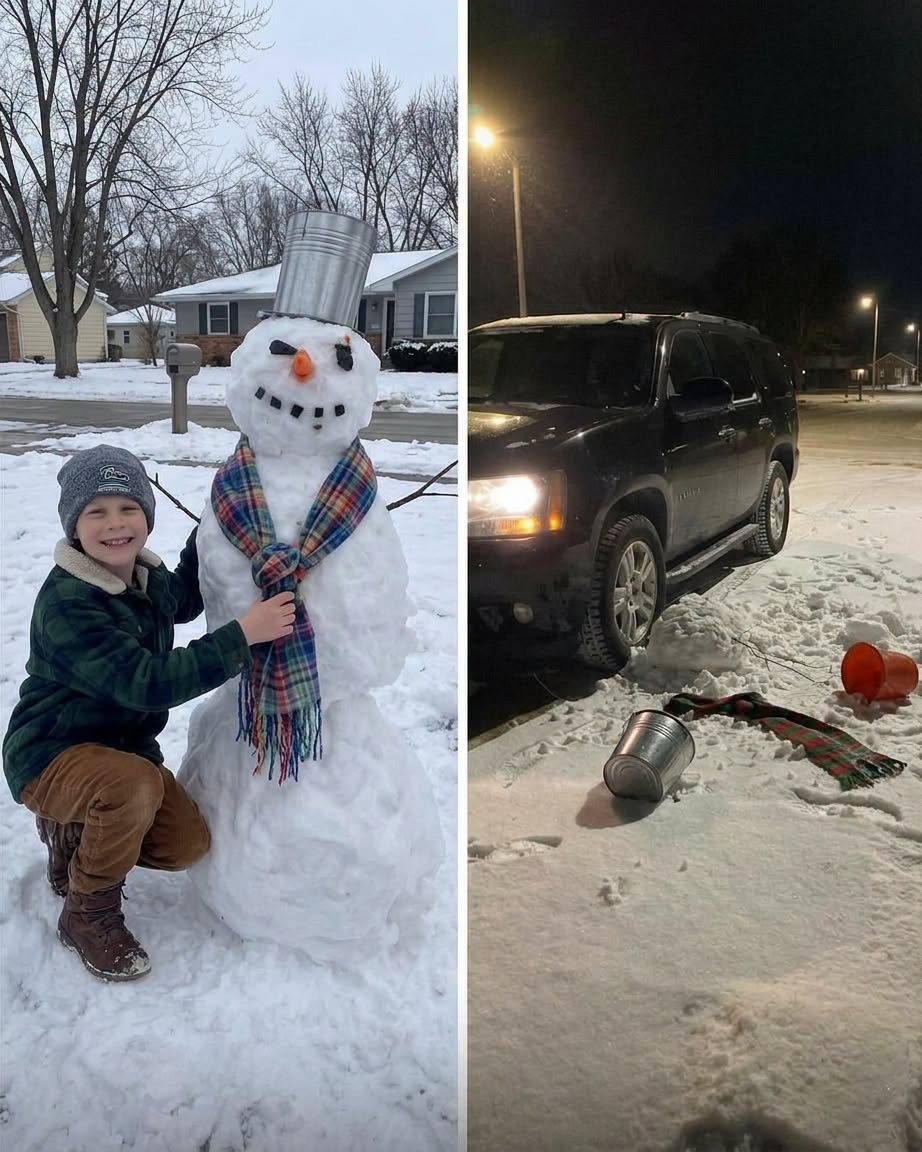
Every afternoon after school, he rushed outside, cheeks glowing red, carefully building snowmen with names, personalities, and the same red scarf that made each one feel alive.
Watching from the window reminded me how simple joy can be. But that joy was repeatedly erased by tire tracks.
Our neighbor regularly cut across that corner while pulling into his driveway, crushing the snowmen without slowing down.
I asked him politely to stop, explaining how much it hurt my child, but he waved it off. To him, it was “just snow.” To my son, it was something made with care.
After each incident, my son came inside quieter, fighting tears as he explained another snowman was gone. I tried comforting him, suggesting a different spot, but he refused.

That corner mattered—not for convenience, but because it felt right. Even at eight, he knew he wasn’t doing anything wrong. The hardest part wasn’t the broken snow, but an adult’s refusal to respect both our property and his feelings.
Then one afternoon, my son came in calm. Another snowman had been destroyed, but he told me not to speak to the neighbor again. He had a plan, he said—nothing harmful, just something to stop it. The next day, he built a large snowman near the edge of the lawn. I noticed hints of red beneath the snow, but thought nothing of it.
That evening, a loud crash drew us to the window. The neighbor’s car had hit the fire hydrant, water spraying everywhere. The snowman had been built around it, clearly marking the boundary. Once again, he’d driven onto our lawn.

No one was hurt, but the message was clear. City crews came, responsibility was established, and from that day on, the neighbor stayed off our grass. My son kept building snowmen all winter. Some melted, some fell—but none were crushed again.
And every time I looked at that corner, I remembered how even gentle lessons, placed wisely, can set boundaries loud and clear.