Part 1:
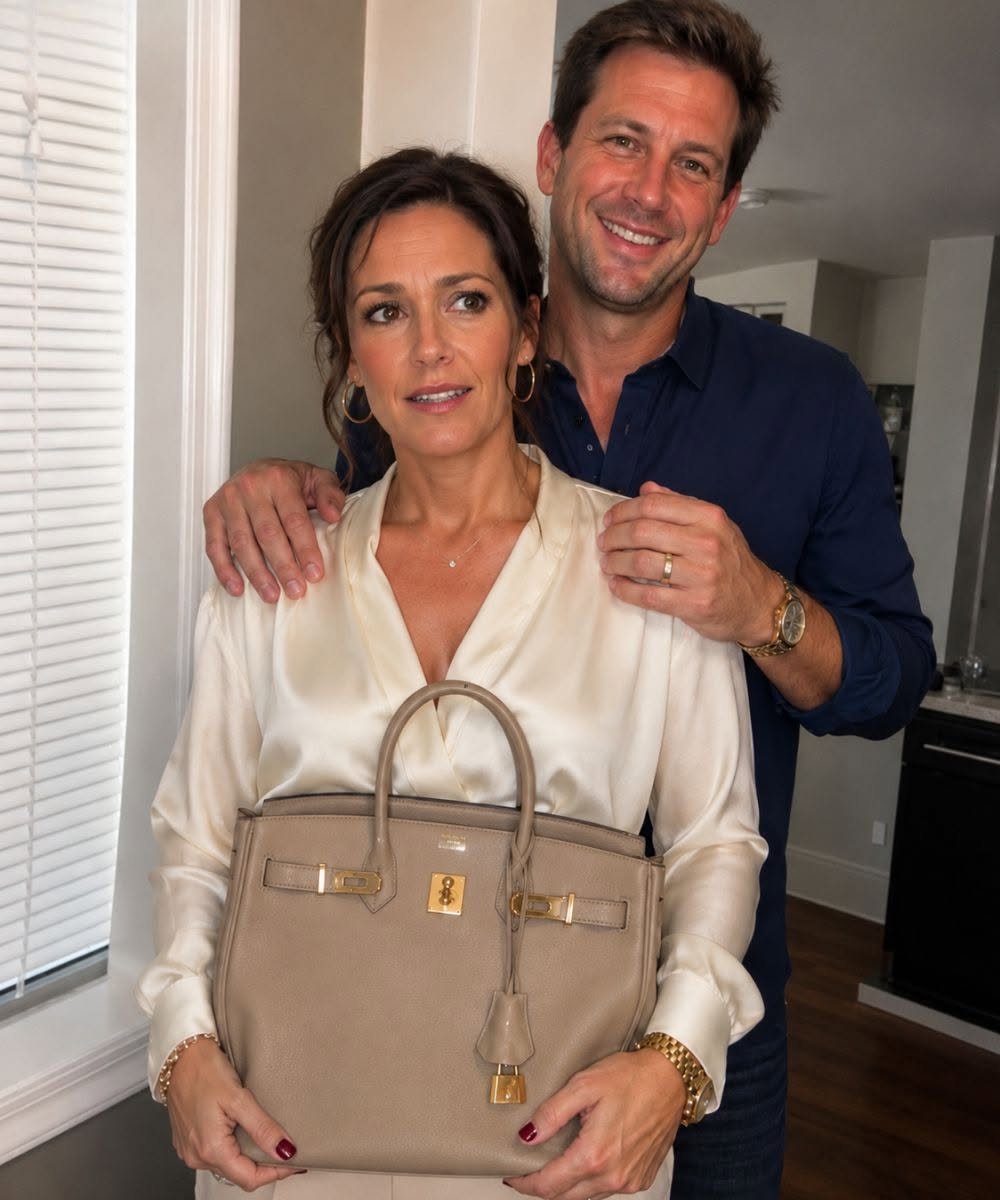
For fifteen years, my husband insisted that buying gifts was a waste of money. Then, on my birthday, he surprised me with a designer handbag that left everyone speechless.
I smiled for the photos—until my fingers found a folded note hidden inside the lining. It held nothing but an unfamiliar phone number. In that instant, I realized the beautiful purse had belonged to another woman before it ever reached me.
Robert had never been the kind of husband who bought presents.
Not once during our fifteen years of marriage had he come home with flowers, tucked a birthday card into my hand, or planned a romantic anniversary dinner. Jewelry, chocolates, little surprises—those simply weren’t part of our life together.
“Flowers wilt.”
“Cards end up in the trash.”
“Gifts are just money disappearing.”
Those were Robert’s favorite sayings. After hearing them for so many years, I could practically recite them before he opened his mouth.
Still, on the morning of my thirty-fifth birthday, something felt different.
I stood in our bedroom wearing my favorite navy-blue dress while Robert struggled to fasten his tie.
That alone caught my attention.
Robert never fidgeted.
He balanced every dollar we spent, clipped coupons with almost obsessive precision, and once drove across town because the grocery store had accidentally overcharged us a few dollars.

Yet that morning, he dropped his tie clip twice.
“Big plans today?” I asked.
He looked at me through the mirror before quickly looking away.
“For you, Elle.”
He only called me Elle when he felt especially emotional.
For the past three months, though, he’d barely seemed capable of emotion at all.
He left before sunrise and often returned home long after midnight. His clothes smelled faintly of industrial cleaner instead of our detergent, and several times I noticed fresh scratches across his hands and wrists.
Whenever I asked about them, his answer never changed.
“Nothing happened.”
Robert was a terrible liar.
That evening, our small dining room filled with laughter.
My sister Lila decorated with balloons and paper streamers. My mother brought her famous casserole. Friends arrived carrying bottles of wine. Someone placed candles on a chocolate birthday cake.
Throughout the evening, Robert stood quietly near the kitchen doorway with one hand inside his pocket, watching me as though he were waiting for something important.
After everyone finished singing Happy Birthday, he stepped forward carrying a large cream-colored box.
The room immediately fell silent.
Not because people were being polite.
Because nobody had ever seen Robert give me a present.
A gold designer logo gleamed across the lid.
Lila gasped.
“Elaine…”
Robert cleared his throat.
“Open it.”
Carefully, I lifted the lid and folded back the tissue paper.
Part 2:
Inside rested an elegant black leather handbag trimmed with polished gold hardware.
For one brief moment, every practical lecture Robert had ever given me disappeared from my mind.
It was stunning.
But the second I wrapped my fingers around the handle, something felt off.
The leather wasn’t stiff like a brand-new purse.
It was incredibly soft.
Too soft.
The handle carried the faint bend left behind by years of someone else’s grip.
This wasn’t new.
Someone else had owned it.
Lila whispered, “That thing probably costs more than my car.”
Everyone applauded.
Robert smiled nervously.
“For my beautiful wife.”
I wanted to believe him.
Then my fingertips brushed something hidden inside one of the interior pockets.
A folded piece of paper.
I didn’t pull it out—not while everyone was watching.
Instead, I smiled for photographs while an uneasy feeling settled deep inside my stomach.
Throughout dinner, Robert barely touched his food.
His phone buzzed twice, and both times he silenced it immediately without checking the screen.
When my sister teased him, saying she never imagined he’d splurge on such an expensive gift, Robert forced a smile.
“Neither did I.”
It should have sounded sweet.
Instead, something about it felt painfully wrong.
After our guests finally left, I carried the handbag into the kitchen.
Robert stood silently at the sink, staring into the dark reflection of the window.
I reached into the hidden pocket and unfolded the paper.
There was no message.
No name.
Only a phone number written carefully in blue ink.
The moment Robert saw it, every trace of color drained from his face.
“Where did you get that?” I asked quietly.
His throat tightened.
“Elle…”
“Don’t call me that. Tell me where this purse came from.”
He grabbed the edge of the counter as though trying to steady himself.
“I can explain.”
“Then explain.”
After several long seconds, he finally whispered,
“The handbag belonged to someone else.”
The words landed like ice.
“To another woman?”
Robert closed his eyes.
He didn’t have to answer.
My mind instantly connected every late night, every scratch, every unfamiliar smell clinging to his jacket.
“How long?” I whispered.
“No,” he said quickly. “It isn’t what you’re thinking.”
I laughed bitterly.
Part 3:
“Men always say that when it’s exactly what we’re thinking.”
His expression crumpled.
“I was only trying to do something good.”
“With another woman’s handbag?”
He looked toward the folded paper.
“It’s too late to change any of this now.”
My hands trembled.
Before fear could stop me, I dialed the number.
The phone rang twice.
A woman answered.
“Millbrook Hospice Services. This is Anna.”
I froze.
Across the kitchen, Robert slowly sank into a chair.
“Hospice?” I asked.
“Yes. How may I help you?”
“My name is Elaine. I found this number inside a handbag.”
There was a long silence.
Then Anna spoke gently.
“Elaine… Margaret hoped you’d call.”
“Who is Margaret?”
“She was one of our patients.”
My heart skipped.
“She passed away two weeks ago.”
The room seemed to tilt beneath my feet.
“Why would her handbag be in my house?”
“Because she left it for you.”
Nothing made sense anymore.
Anna explained that Robert had secretly been working evening shifts at the hospice for months—transporting patients, cleaning rooms, helping wherever he could.
Margaret had grown very fond of him.
“She had no family left,” Anna said. “She wanted the handbag to belong to someone who would appreciate what it truly meant.”
“But she never met me.”
“No,” Anna replied. “But she knew everything Robert told her about you.”
I couldn’t speak.
Anna continued softly.
“He told Margaret how you always admired yellow roses but never bought any for yourself. He talked about how you stayed up late baking birthday cakes for everyone else. He even mentioned the way you hummed while folding laundry.”
Tears filled my eyes.
Robert had noticed every one of those little things.
He simply never knew how to show it.
“One more thing,” Anna added.
“Margaret left you a letter.”
I ended the call.
Without saying a word, Robert reached into his jacket and handed me an envelope addressed to me.
Inside was a handwritten letter.
Margaret explained that she had listened to Robert talk about me nearly every evening while he worked.
She wrote that a man who remembered the smallest details about his wife clearly loved her deeply—but fear had become his language.
She explained that Robert had grown up watching his family lose everything after disastrous financial decisions. Ever since childhood, he’d believed that spending money on unnecessary things could destroy a family’s future.
“Fear,” she wrote, “is a terrible way to express love.”
She told me her late husband had bought the handbag after forty years of marriage.
When she’d protested about the price, he’d smiled and said,
“Some things are worth far more than what they cost.”
Then came the final sentence.
“And Robert… if you’re reading this beside Elaine… buy your wife flowers.
Yes, they’ll die.
That’s exactly why they’re worth giving.”
By the time I reached the end, the page had become blurry with tears.
Across the table, Robert was crying too.
He admitted he’d taken the hospice job because he’d wanted to earn enough extra money to buy me the designer handbag himself without touching our savings or emergency fund.
Before he managed to save enough, Margaret had passed away and chosen me as the next owner of hers.
He confessed everything.
The childhood poverty.
The fear.
The constant belief that protecting tomorrow mattered more than celebrating today.
Then he looked at me and quietly admitted,
“In trying so hard to make sure you always felt secure… I accidentally made you feel invisible.”
He was right.
I had never doubted that Robert loved me.
But love that is never shown can slowly begin to feel absent.
A few weeks later, we invited our family back for dinner.
After dessert, I read Margaret’s letter aloud.
When I finished, nobody spoke for several moments.
Finally, Lila smiled through tears.
“I thought Robert was trying to impress everyone.”
Robert laughed softly.
“That would’ve been much easier.”
For the first time in years, everyone understood him.
Including me.
Today, Margaret’s handbag is still in my closet.
Not because it’s expensive.
Because her letter remains folded inside the hidden pocket.
And last Friday, Robert came home carrying one single yellow rose wrapped in clear plastic.
The price sticker was still attached.
“I know it’ll die,” he said with a shy smile.
I laughed until tears filled my eyes.
Then I placed it in a vase, knowing some gifts are valuable not because they last forever—but because someone finally chose to give them.