At 9:20, Judge Crow signed the order to remove my dam. I stood at the evidence table with the brass mill key pressed into my palm.
Heather Lynn gathered the pages of her petition beside me. One sheet slipped to the floor, and she bent to pick it up before the judge had put down her pen.
“Is there a date in the order?” I asked.
“There is,” Judge Crow said. She removed her glasses to read the last line. “You will receive a signed copy, Mr. Thibault.”
I had brought the key because I meant to stop at the mill afterward. Its little brass tag was worn smooth where my thumb had rubbed it over the years. Now I held it against the edge of the table.
“Before I take anything down,” I said, “can you consider the inspection?”
Judge Crow placed the signed pages in front of her. “You are asking me to reconsider the ruling based on an inspection?”
“One inspection,” I said. “It found the structure sound. I thought Heather might want to see it before the work started.”
Heather lifted her head. “Our community asked for the river to flow freely. We brought that request to court.”
“Would you look at it?” I asked her. “Even now?”
She tucked the loose sheet back into her petition. “I’ll look at what you have, Rowan.”
Judge Crow drew the order toward her. “The ruling has been made. If you want the court to consider additional evidence, you will need to make a proper request. Until an order is changed, it remains in effect.”
She handed me my copy. I took it by the top corner, keeping the key in my other hand, and found the deadline on the last page. May 14.
The dam had stood on my family’s property since 1793. Under the order in my hand, I had to remove it by May 14 unless the ruling was lawfully changed.
“I understand the date, Judge Crow. I am asking about the water.”
“I understand your concern,” she said. “Bring any request back to the court in the proper form.”
Heather slid her petition into a folder. “The community will need a copy of the order for the noticeboard.”
“I’ll bring the inspection over,” I said. “You can keep a copy for the neighbors.”
She nodded, but she did not say when she would look at it.
The judge waited while I read the last paragraph again. The key left a small mark in my palm when I opened my hand.
“I will comply unless the order is lawfully changed,” I said.
Judge Crow gave a short nod, and Heather picked up her folder. I folded the order around the brass key so I could not leave either behind.
At 12:15, Heather pressed a thumbtack through the copy of the order on the clubhouse noticeboard. Martin stood beside her with a stack of notices.
He handed me one. “We sent these to the residents this morning. Heather left a copy for you.”
Under the heading, I read that the dam had been ruled an unlawful obstruction. Below that was a small drawing of the reservoir and its old shoreline.
“Does it say anything about the inspection?” I asked.
“There wasn’t room for every document,” Heather said. She reached for another tack. “The community needed the court’s decision.”
I read the notice to the bottom. It mentioned my name, the dam, and the deadline. It did not mention the inspection at all.
“I brought the summary,” I said. “Will you put it in the HOA file?”
Heather held out her hand. I gave her the two pages, dated and stapled at the upper left corner. She read the first paragraph while Martin took the notices from the table.
“The inspector found the structure sound,” I said. “That doesn’t settle how a major flood would behave, but it’s part of the record.”
Heather turned to the second page. “The community asked us to post the order. I can look at this.”
Martin found a chair and sat down backward on it. “Once the ground is exposed, there could be opportunities for the community.”
“What kind of opportunities?” I asked.
“Walking paths, perhaps. A little more room along the water.” He glanced at Heather. “We can discuss that when the time comes.”
Heather handed me the summary. “I need to put the notice in the file first.”
The copier beside the cabinet had a handwritten sign taped to it: fifteen cents a page. I found a quarter in my pocket, but the machine returned two nickels and a dime.
“It has its own idea of fifteen cents,” I said.
Heather smiled and opened the cabinet. “Give me the quarter. It likes mine better.”
The machine accepted her quarter and made one copy of the notice. I set my inspection pages on the table beside her, with the date facing up.
“Will the residents be able to read this too?” I asked.
“We can discuss what goes out,” Heather said. She took the copied notice to the cabinet and slid open a drawer.
“A ruling can tell me what to remove,” I said. “It cannot tell the river where to go.”
Martin picked up his copy of the notice. “Claire still works with water, doesn’t she?”
“She does,” I said.
Heather called from the cabinet, “Rowan, would you leave the summary there for me?”
I laid my hand on the staple, then stepped back. Martin borrowed my pen and bent over the drawing.
He circled the old shoreline.
He handed my pen back without its cap. I found the cap beside the notice and pushed it on.
At 7:10 that evening, Claire cleared the mugs from the mill kitchen table and set down a paper tube. One mug had a chip in its handle.
“That one’s yours,” she said.
“Two good handles in this kitchen, and you gave me the bad one.”
“You always take it.”
She pulled a map from the tube. Its corners rolled inward, so I held them down with the property records. A red boundary followed the river past the dam and spread into Cascade Meadows Estates.
“How far does it go?” I asked.
“Forty-seven lots are inside it.” She held her pencil across two fingers. “But I need to check the elevations before I can stand behind that boundary.”
I leaned closer. Some red marks touched houses. Others covered only a strip of yard.
“Does that mean forty-seven houses flood?”
“No. It means forty-seven lots could be exposed under these assumptions. I cannot tell you where the water would reach on each lot yet.”
She turned the map toward me and pointed to a narrow blue line. In one calculation, the reservoir stayed behind the dam. In the other, its storage was gone.
“Eleven million gallons,” I said. “Is that the difference you’re using?”
“That’s the storage we lose. The model still has to account for the shape of the channel and what comes down during the storm.”
I put my finger on the red line where it crossed a road. “What kind of storm?”
“What do you think I assumed?”
“The worst one you could find.”
She shook her head. “A reasonable major spring storm. Not the worst imaginable. A different storm could give us a different boundary.”
I took my hand off the road. The paper curled against the property records, lifting one corner of an old deed.
“Can the town check the elevations?”
“I can defend the assumptions, Dad, but I still need the elevations checked. Their records may get us partway. We may need a survey, too.”
She uncapped her pencil and looked at the inspection summary beside my plate. I moved it toward her, and a receipt slipped out from underneath.
“What’s this?” she asked.
“Twenty-two hundred dollars. I paid for preliminary work before the hearing.”
“From where?”
“My emergency fund.”
Claire laid the receipt flat and read the date. “How much is left?”
“Enough for the bills this month. I haven’t figured the rest.”
She reached for her phone. “Heather should see the map, even with the boundary marked preliminary.”
“And the inspection?”
“We can take both.”
She searched for the town engineering office, then wrote its number beside the red boundary.
“I’ll take a copy over to Heather,” I said.
Claire held the map flat while I found a clean sheet of paper to put over it. “Please tell her the boundary still needs checking.”
“I will. Can you spare the inspection summary too?”
She handed it to me. “Bring it back if she won’t take it.”
At ten the next morning, I laid both papers on the clubhouse meeting table. Heather was there with Martin and two board members, one of whom moved her coffee away from the red lines.
“Forty-seven lots,” I said. “That’s Claire’s estimate for a major spring storm, with the dam’s storage gone. She needs the elevations checked before she can fix the boundary.”
Heather leaned over the map. “Will the town engineering office look at it?”
“Claire plans to ask. I’d like the board to see the inspection as well.”
One board member picked up the summary. “Wasn’t this already in our file?”
Heather went to the cabinet and brought back a folder. She opened it between us. The signed order was on top, with the notice underneath.
“Two documents,” I said. “Where is the inspection?”
Heather turned the folder over and checked its pockets. “It isn’t here. I took it from you at the noticeboard, but I didn’t put it in the file.”
The board member handed my copy back to me. “Then perhaps Rowan can leave this one.”
“I brought it for the file,” I said.
Heather glanced at Martin, then at the others. “The community asked us to proceed with removal. This is Rowan’s family assessment, and we haven’t had it checked.”
I held the paper out a little longer. “The inspection is mine. The map is Claire’s. They aren’t the same document.”
“I can see that,” Heather said. “You can leave them here, Rowan. That is not the same as an official finding.”
I put the summary beside the map. One board member reached for it, then stopped when Heather lifted a letter from the folder.
“Mrs. Bell wrote to ask about the old shoreline,” Heather said. “She wants to know who owns the ground if the reservoir is drained.”
Martin pulled a folded map toward him. “There may be opportunities for the community once we have a proper description.”
Heather picked up a pen. “I don’t want to give her an answer until we have one.”
I asked whether she would put both of my papers in the file. She tucked the inspection under the notice and laid Claire’s map on top.
“We’ll review them,” she said. “I can’t promise a change.”
I looked down at Martin’s map while Heather began her reply. Between the fold and the south bank, someone had written, “Private purchase, south bank.”
I wanted to ask him what he meant, but Heather was still writing. I would need to verify the note before I told Claire.
Martin closed the map over the words.
Heather put down her pen. “I’ll review what you left, Rowan. I can’t promise when the board will discuss it.”
“One request,” I said. “Will the residents get a chance to see Claire’s assessment?”
“I’ll need to read it first.”
At 2:30, Claire spread her red map beside Susan’s elevation records at the town engineering office. I laid the property descriptions along the desk and borrowed a ruler.
Susan found the town benchmark on Claire’s drawing. “What elevation did you use here?”
“Six hundred twelve feet,” Claire said. “What does the town record say?”
Susan checked a page and wrote “feet” beside the figure. “Six hundred twelve point two. Let me check the next one.”
I measured from the road to a lot line on Claire’s drawing, then compared it with the description. The old deed called the road by a name that had disappeared from the town map.
“Same road,” Susan said. “The name changed when the subdivision went in.”
She checked three more elevations, writing the units beside each number. Claire watched without touching the map.
“They’re broadly consistent with yours,” Susan said. “But this road crossing is low, and our record doesn’t give me enough detail there. It needs a fresh survey.”
“Does that mean the boundary could move?” I asked.
“It could. The elevations are measured. The storm response is modeled. We need both labels.”
Claire pointed to the red line near the crossing. “What does the road record assume about the culvert?”
“It gives its size, not a recent elevation,” Susan said. “An independent crew can measure the road and the culvert opening.”
Claire took a folded estimate from her bag. “I asked for a price last week. They can do it for $1,800.”
I looked at her. “Where were you going to find that?”
“Nine hundred dollars was in my car fund,” she said. “The rest wasn’t settled.”
Her car had made a noise every time she backed out of my yard. She had told me the radio could cover it.
“I thought you were replacing it,” I said.
“I was. It can wait.”
“I’ll pay the other $900.” I took out my checkbook, then put it back when Susan pointed to the crew’s billing instructions.
Claire signed the authorization and slid it to Susan. “Can you have them send the measurements to both of us?”
“And to me,” Susan said. “I’ll check them against the town records.”
I asked whether the completed assessment could go to the HOA for the residents. Susan said she could provide the verified elevations, but Heather would have to decide how the HOA distributed the assessment.
Claire handed Susan her phone number. Susan called the survey crew and turned to the office calendar.
She entered the appointment.
“Could we get a copy of the property description too?” I asked Susan. “The south bank wasn’t clear on the old drawing.”
“I’ll look for it,” she said. “The records room may have a better description.”
At 4:45, Heather handed me a stack of envelopes in the clubhouse kitchen. A sheet on the counter listed addresses in Cascade Meadows Estates, with a small check beside each one.
“Forty-seven households,” she said. “Would you fold the supply lists? I’ll put the notices in.”
I folded the first list and saw flashlights, drinking water, batteries and a note about keeping medicine handy. At the bottom, Heather had written that supplies could be collected at the clubhouse.
“Can people come here if they need help carrying them?” I asked.
“Yes. We can put a table by the door. Some of the folks in the lowest homes don’t have much room to store water.” She set the kettle on and reached for two mugs.
One mug had a chipped handle. She gave herself that one, then found a spoon in a drawer full of rubber bands and birthday candles.
“Those candles must have been here since the clubhouse opened,” I said.
“Two years, at least. Martin bought too many for my birthday.” She put a tea bag in each mug. “He insisted I needed every one.”
I slipped a list into an envelope. “Have the residents seen Claire’s map?”
“They have the notice from the board, and we’re sending this today. Everyone has the relevant information.” She took the kettle off before it could whistle.
I picked up a notice from her pile. The first paragraph gave the clubhouse hours. The second said the HOA had received no flood report.
“What’s this based on?” I asked.
Heather leaned over the counter. “Which part?”
“This sentence. Claire left her assessment with you.”
She put her mug down beside the addresses. “Let me finish the mailing before we argue about the wording.”
“Will you hold these until we can get it right?”
“No. The community needs the supply information now.”
I turned the notice over, but there was nothing on the back. “You could put Claire’s map in with it.”
“The survey isn’t finished,” Heather said. “Those families are my neighbors too. I have put the supply list in every envelope.”
I looked at the stack already addressed. “Forty-seven,” I said. “That’s every household on your list.”
“Yes. I don’t want the low homes waiting for a flashlight or a place to ask for help.”
I held out the notice. “Then why does it say you received no flood report?”
Heather took the page from my hand and folded it once. She slid it into an envelope with the supply list.
“I’ll talk to you about it after these go out,” she said.
She sealed the envelope.
I picked up the stack addressed to the lowest houses and put it beside the door. “I’ll take these to the post office,” I said.
Heather gave me the rest of the envelopes. “There’s a box on the corner. You won’t have to wait in line.”
At 11:40 the next morning, Susan was looking through the town records with me. The survey was nearly finished, and I wanted the property description checked before Claire put the final boundary on her assessment.
“The south bank is in this volume,” Susan said, pulling a heavy book onto the counter. “The shoreline inquiry should be with it.”
“What inquiry?”
“I haven’t read it yet.” She opened a drawer beneath the book and began turning through folders.
Heather came in carrying her canvas bag. “The HOA needs a copy of the property description. May I get one while you’re looking?”
Susan pulled a folder from the drawer. A folded sheet slipped out, and she caught it against the counter.
“Here’s the description,” she said. “And here’s the inquiry.”
She opened the sheet. A shoreline had been marked in pencil, with a short note near the south bank. I recognized the shape from Martin’s map.
“May I see that?” I asked.
Susan passed it over with a second page attached. I found Martin’s name near the bottom, but the date was on the other page.
Heather set her bag on a chair. “Why would Martin have asked for this?”
“I saw a note on his map at the clubhouse,” I said. “It said private purchase, south bank. He put the map away before I could ask him.”
“You didn’t mention it.”
“One note wasn’t enough. I wanted to find out what it meant.”
Susan handed Heather the second page. “This was filed before the hearing,” I said. “Look at the date.”
Heather read the first lines, then moved closer to the window. “He proposed buying part of the reservoir bottom if it was drained,” she said. “He never told me.”
Farther down, the proposal stated that the HOA had no automatic claim to the exposed land. Heather read that sentence twice.
“He talked about opportunities for the community,” I said. The words sounded different with his proposal in her hand.
Susan placed the property description beside it. “This is an inquiry, not a deed. It doesn’t show a sale.”
Heather took off her reading glasses. “I need a copy to take home. And I need the flood assessment, all of it, for the residents.”
Susan opened the verified packet on her desk. The survey elevations were marked in feet, and Claire’s modeled boundary remained in red. “The measurements are checked,” she said. “The storm response is still an estimate.”
“We can circulate those pages together,” Heather said. “The board will also need to discuss the May 14 order.”
I asked Susan whether I could seek a hearing without booking removal first. She set down the copy request form and said she couldn’t advise me about the court order.
At the copier, Heather counted out her coins. Susan found one extra page in the feeder and handed it over without charging her.
Heather separated Martin’s proposal from the property description and folded it into her purse.
Susan held out a stack of copies. “How many did you need for the residents?”
“Forty-seven, please,” Heather said. She took one from the stack and turned to the page with the elevations. “Can I put these out today?”
“Yes,” Susan said. “The survey figures are verified. The storm response is still a model.”
Heather nodded and tucked the copies under her arm. I asked her about the notice she had already mailed.
“It said the HOA had received no flood report,” I said. “Claire gave you hers.”
Heather pressed a thumb against the top page. “I didn’t count it as an HOA report. She did the work for your family.”
“The residents needed to see it,” I said.
“They will see it now.” She glanced at the office clock. “I have to take the board a letter this afternoon.”
“What letter?”
“A notice about compliance. The board asked me to deliver it to you.” She shifted the copies to her other arm. “Where will you be?”
“At the bank by three twenty,” I said. “Claire and I are meeting there.”
At the counter, Claire pulled the contractor’s booking form from her folder while the teller looked up my account. Heather came through the bank door carrying an envelope.
She handed it to me without sitting down. The board’s letter said the HOA would seek a compliance motion unless I showed that removal had been arranged. I read the sentence twice.
“How soon does the board want proof?” I asked.
“Before we file,” Heather said. “A booking confirmation will do.”
Claire laid the form beside the letter. “What does the booking assume about the date?”
“It holds a crew for May 14,” I said. “The contractor can still fit us in.”
She read farther down. “Dad, ask about the deposit.”
I called from the counter. The contractor answered after four rings and found my name on his list. I asked him to read the cancellation terms to me.
“The deposit is nonrefundable,” he said. “Even if the order changes.”
“Five thousand four hundred dollars,” I said. “All of it?”
“Yes. We reserve the crew and turn away other work.”
I thanked him and ended the call. Claire took my phone before it could slide off the counter, then handed it back with the screen still lit. “You nearly donated that too,” she said.
Heather looked at the booking form. “The board didn’t set his terms.”
“I know,” I said. “I am paying this because the order stands today, not because I agree with the work.”
The teller waited while I authorized the payment and the contractor confirmed the booking. Claire kept one hand on her folder. We still had to get the verified assessment before Judge Crow, and May 14 was coming.
The teller slid the receipt across the counter, deposit terms facing up.
I picked up my pen and put it back in my pocket. Claire reached for the booking agreement before I could fold it.
“Can we ask the contractor for an exception?” she asked.
“We can ask,” I said. “I wouldn’t count on one.”
Heather held the board’s letter against her coat. “The community needs proof the work is arranged. May I have a copy?”
“One copy,” I said. “The agreement stays with me.”
At 6:30 the next morning, Claire had three labels ready on the mill kitchen table. She put the first on the survey and reached for the flood model.
“Where is Susan’s certification?” she asked.
I lifted a sheet from beneath the red map. Susan had signed and dated the town’s elevation copies, and she had written the units beside the measurements. Claire slipped them behind the survey.
“That answers the elevation question,” she said. “It doesn’t make the modeled storm a guarantee.”
“Will the judge have enough time to hear it?”
“I don’t know. We can ask for an expedited hearing.”
I pulled the inspection summary from its folder. The date was clear at the top, though one corner had caught under the metal clip.
Claire wrote “Original inspection” on a label. “This was done before the order?”
“Yes. Put the date on the exhibit label too.”
She laid the red map beside it. The forty-seven marked lots showed through the paper when she lifted one edge. “I’ll include the assumptions with the map. What are we doing with Martin’s proposal?”
I took the copy from my folder. “Leaving it out of the motion.”
“He filed it before the hearing.”
“He did. We are asking her to examine the risk, not asking her to punish Martin.”
Claire put the proposal back. Then she opened the contractor agreement and followed a line with her finger. “It says a canceled booking forfeits the deposit.”
“Five thousand four hundred dollars,” I said. “We’ll still ask whether they’ll make an exception.”
She folded the agreement and set it apart from the court papers. I filled in the motion, asking Judge Crow to vacate the order and consider the new safety evidence.
“Will Heather get all of this?” Claire asked.
“Yes. A complete copy, including the map and the request for a hearing.”
The filing and service would cost another $460. I wrote the amount on the back of my checkbook, then filled out the check. The assessment would no longer stay within the family.
Claire handed me the hearing request. A spot of jam had dried beside the signature line, and she rubbed at it with her thumb.
“You still eat at this table?” I asked.
“Only when there isn’t a flood map on it.”
She passed me a clean sheet. I signed the request and put it in the outgoing envelope.
“Will Heather get her copy before we hear back?” Claire asked.
“Two copies go out today,” I said. “One for her and one for the court.” I slipped the contractor’s number into my pocket.
At 10:30 on May 9, Judge Crow asked us to come forward. Heather sat across from me and opened her copy of the motion. Claire set the rolled red map on the table between us.
“You are asking me to vacate the removal order,” Judge Crow said, “based on evidence not considered at the earlier hearing. Is that correct?”
“Yes, Judge. The inspection was dated before that hearing. The survey and flood model came later.” I handed the inspection to the clerk.
Judge Crow studied the date. “Was this in the homeowners’ association record when the petition came before me?”
“No, Judge,” Heather said. She kept her eyes on the document as the clerk handed it back.
Claire eased the map open, and I held one corner. A red boundary crossed streets and lots below the dam. Judge Crow asked what the color represented.
“What does the calculation assume?” Claire asked. “A major spring storm, with the dam in place and with its storage removed. It is a comparison, not a prediction of the next storm.”
“How many lots fall within the boundary?”
“Forty-seven. The elevations have been checked against town records and an independent survey.” Claire passed forward Susan’s signed certification. “The storm response is still a model.”
Judge Crow took off her glasses to read the last line. “Could the boundary change with a different storm?”
“Yes. A smaller storm could produce different results. So could a larger one.”
Heather reached over to hold the map’s other corner when it began to curl. “It has a mind of its own,” she said.
“It came by that honestly,” I said, and Claire gave me a quick look. Heather did not let go of the corner.
Judge Crow turned to her. “Have the residents received this assessment, and does the association oppose the motion?”
“The community has seen it,” Heather said. “The families in the lowest homes need a proper safety review. We agree removal should not proceed without one.”
I took my hand off the map. The corner stayed down under Heather’s fingers.
“Who will keep the original?” Judge Crow asked.
“I haven’t decided yet,” Claire said. “The town has a copy.” She looked toward me, and I nodded.
I touched the contractor’s number through my jacket. The booking terms were plain, but I still meant to ask about the deposit.
“The order is vacated,” Judge Crow said. “Any renewed request must address the downstream evidence in a separate proceeding.”
She marked through May 14 on her working copy.
Claire reached for the exhibit, but the clerk asked her to leave it on the table until the copies were checked. Heather waited beside us, her hands resting on the back of a chair.
“Will the residents get the ruling?” she asked.
“Yes,” the clerk said. “The written copy will be available.”
On May 14, at 6:15 in the evening, Claire came into the mill yard carrying that copy and an envelope from the contractor. I was beside the dam, clearing a fallen branch from the path.
“I called about the booking,” she said. “There won’t be any equipment coming tonight.”
She handed me the envelope before I could ask about the deposit. The letter inside was short, but I read it twice.
“The agreement says the deposit is nonrefundable,” I said. “Did you ask for an exception?”
“I did. They said they had held the date for us.” She pointed to the last line. The contractor had written that no refund would be issued.
“Five thousand four hundred dollars,” I said. I put the letter back in its envelope, then took it out again to make sure I had read the amount correctly.
Claire picked up the branch and dragged it off the path. “You paid it so you could obey the order while we asked for a hearing.”
“I know why I paid it.” I looked at the letter. “I just hoped they might give some of it back.”
A car pulled into the yard, and Heather stepped out with a sheet of paper in her hand. She stayed near the gate while Claire came back from the path.
“The board wants a public meeting,” Heather said. “We haven’t set the date. I brought the request so you could see it first.”
I took the sheet. There was room at the bottom for residents to suggest questions, and several lines had already been filled.
“I could read Martin’s proposal aloud,” Heather said. “People ought to know about it.”
“Tell them what the water study says,” I said. “Give them the court ruling too. They don’t need Martin put on display.”
Heather looked at the request in my hand. “The proposal is still in the public file.”
“Yes. Anyone can ask to see it there.”
She took the sheet back, and Claire asked who would bring the map to the meeting. Heather said the board would need a copy, then opened her car door without asking where the original would go.
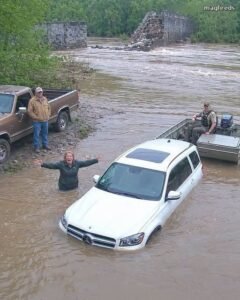
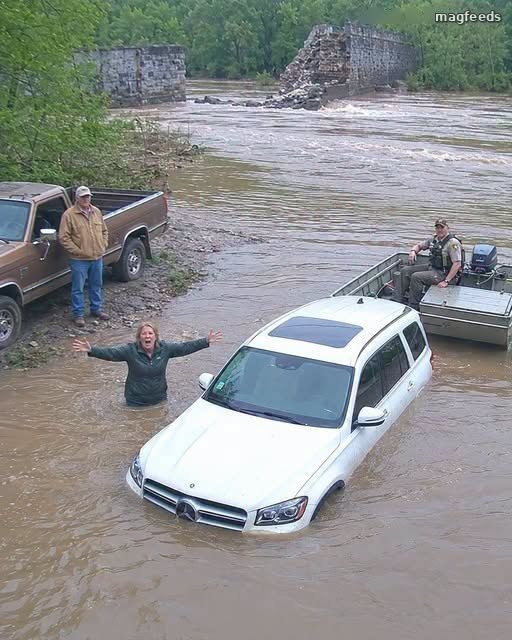
After she left, Claire and I walked the length of the dam. Water passed over the stones, and the old structure stood intact. By the time we came back, it was dark, and May 14 was ending without a removal crew.
“I forgot to bring a flashlight,” I said.
Claire took one from her coat pocket. “Two batteries,” she said. “I checked them this morning.”
Back in the yard, I gave her the contractor’s letter. She folded it and tucked it behind the vacated order.
“Will you take those inside?” I asked.
Claire looked toward the mill. “I’ll bring them next week. I want to give the map a proper place, too.”
“Not the kitchen table?”
“Not unless you want your coffee on it again.”
I picked up the empty envelope from the grass. “That was one cup.”
“It was a large cup.”
At eight the following week, Claire stood outside the kitchen window with a box in her arms. I hung the brass key on its hook and opened the adjoining mill door for her.
“Where do you want these?” she asked.
“Two shelves are empty. Let’s see what you brought first.”
She carried the box to the table. The original red map lay on top, rolled loosely around a cardboard tube. Under it were the court papers, the inspection, and a stack of survey notes held with a rubber band.
“I left a copy of the map with Susan at the town office,” Claire said. “I thought the original ought to stay here.”
I opened the wide drawer beneath the counter. Someone had put an empty binder in it, along with a ruler and three pencils worn down to the metal.
“Will it fit?” I asked.
“The map will. I’m not sure about the box.”
She unrolled the map and laid it in the drawer. The red boundary was still clear, and her notes along the edge were small enough that I had to lean close to read them.
“What does that one say?”
“Road crossing. Susan wanted the surveyed elevation marked right there.”
I took the court order from the box and opened a folder for it. Claire handed me the inspection, and I put it beside the order. The contractor’s receipt was underneath the other papers.
I held the receipt by one corner. “Five thousand four hundred dollars,” I said. “I could have bought a decent used car for that.”
“You could have bought half of one, looking at the prices I’ve seen.”
I started to set the receipt aside, but Claire held out her hand. “Leave the receipt in there, Dad. It belongs with the rest.”
I put it underneath the order and inspection. Claire wrote “Dam records” on the folder and set it beside the map, then tried to push the drawer shut. It stopped against the binder.
She lifted the binder out and tried again. The drawer closed all the way.
“There,” she said. “You can put your coffee back on the table.”
I carried the empty box through to the mill and left the door open. The key hung beside the open door.