I never imagined I would be telling a story like this. Even now, when I think back on how it began, my chest tightens in a way I can’t quite explain.
What started as a simple attempt to give my child a happy birthday became something far heavier, and far more meaningful, than I could have prepared for.
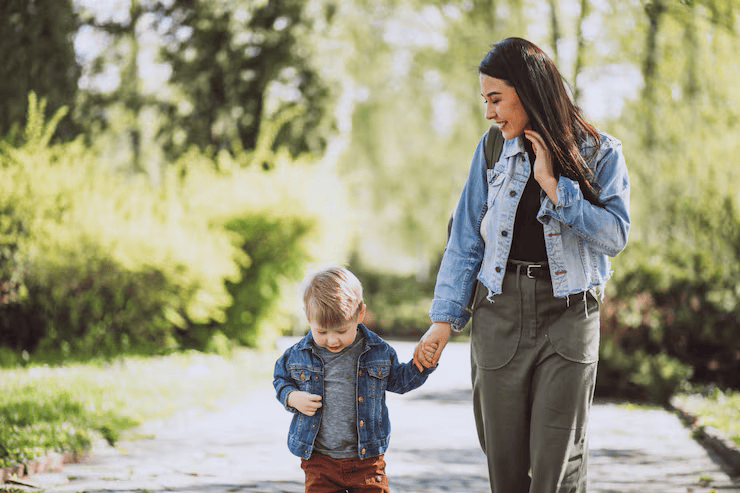
My name is Pauline. I’m thirty-four years old, and I’m a single mother.
For most of my adult life, I’ve worked as a janitor. It’s honest work, but it’s exhausting, and it doesn’t leave much room for extras. My daughter, Eve, just turned six.
Eve is the best part of my life. She’s gentle in a way that sometimes catches adults off guard. She notices when people are sad.
She waits her turn without being asked.
She says thank you like she means it. After everything we’ve been through, her kindness still amazes me.
Three years ago, her father passed away after a long battle with cancer.

One day we were a family of three, and the next it was just the two of us, standing in the quiet after the noise of hospitals and appointments faded away. I tried to be strong for Eve. I told myself that if I held it together, she would feel safe.
Some nights, after she fell asleep, I cried into a pillow so she wouldn’t hear me.
Since then, we’ve been getting by. Rent paid late but paid. Groceries bought carefully. Heat turned down a little lower than comfort would suggest. We built a version of normal that fit inside our limits.
Eve’s birthday was coming up, and I wanted to do something special.
Not something expensive. Just something that felt like effort. Something that told her she was still the center of my world, even when money was tight and life felt smaller than it used to.
The night before her birthday, I sat at the kitchen table with a pen and a stack of bills. I added the numbers. I moved them around. I tried again. No matter how I worked it, the truth didn’t change.
We were short. Again.
I told myself what I always told myself. Love matters more than presents. Eve never asked for much. She never complained. But I saw the way her eyes lingered in store aisles.
The way she reached for toys and then pulled her hand back before I could explain why we couldn’t afford them.
It was like she already understood the answer.
The next morning, with twenty dollars folded into my coat pocket, I went to the flea market. I left Eve with my neighbor, Janice, who promised to bake cupcakes with her and make the day feel festive.
I told Eve I had errands to run. She nodded and hugged me, not asking a single question.
The flea market was quiet that morning. The air was cold enough to sting my nose, and most of the stalls looked the same as they always did. Old tools. Boxes of tangled cords.
Mismatched dishes. Things people no longer needed, laid out neatly and waiting for a second life.
I was almost ready to leave when I saw the doll.
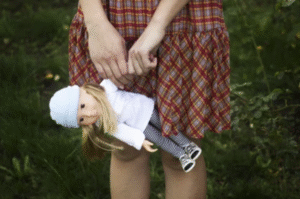
She sat on a faded piece of velvet cloth between two tarnished candlesticks. She was clearly old. Her dress had once been pink, though time had dulled it into something softer and worn. Her yarn hair was thinning in places. But her face was remarkably well cared for.
She had bright blue eyes, open and calm, and in her cloth arms she held a smaller baby doll.
There was something about the way she was made that felt intentional, almost protective. She didn’t look like a toy meant to be tossed aside.
She looked like she had been loved.
I picked her up carefully and turned toward the couple behind the table. The woman looked tired in a way that went beyond lack of sleep. Her eyes were red-rimmed, her face pale beneath a knit hat.
The man beside her stood close, as if ready to steady her if needed.
“How much for the doll?” I asked.
Before the woman could answer, the man cleared his throat.
“Please,” he said quietly. “Take her.”
I hesitated, thinking I had misunderstood. “Are you sure? I can pay.”
The woman finally met my eyes. Her voice was soft, but firm.
“She’s meant to be held,” she said. “Please. Take her and love her. It’s what she would’ve wanted.”
I didn’t ask who “she” was. Something in the woman’s expression told me not to. I thanked them and held the doll close all the way home, feeling as though I’d been trusted with something fragile.
On Eve’s birthday morning, I placed the wrapped box in front of her at the kitchen table. She stared at it for a moment before touching it, as if it might vanish.
“You got me something, Mama?” she asked quietly.
“Of course I did,” I said. “It’s your birthday.”
She tore the paper carefully, not ripping it the way children usually do. When she lifted the doll out of the box, her face lit up in a way I hadn’t seen in a long time.
“She’s beautiful,” Eve said, hugging the doll to her chest. “She even has a baby.”
Watching her joy, I felt something loosen inside me. For a moment, the bills and the worries faded away.
Eve named the doll Rosie and carried her everywhere that morning. I had just turned toward the stove to start breakfast when I heard a faint sound behind me.
It was soft, like static. A gentle crackling noise.
I turned back. Eve was holding the doll, looking confused.
“Did you hear that?” I asked.
She shook her head.
I took the doll and gently examined her. Along the back seam of the dress, my fingers found something uneven. I carefully loosened the stitching and felt a small square of fabric hidden inside.
Wrapped inside it was a folded note and a red paper heart.
My hands began to shake before I even unfolded it.
Written in uneven, childish letters were the words:
“Happy Birthday, Mommy.”
Before I could react, there was a soft click. Then a small voice filled the room.
“Happy Birthday, Mommy.”
Eve looked up at me, serious and thoughtful.
“Mommy,” she said quietly, “I think this doll belonged to someone else.”
She was right.
And that was the moment everything changed.