Dogs experience the world through scent in a way that is far more detailed and sensitive than anything humans can imagine.
While people depend largely on sight, tone, and conversation to understand one another, a dog gathers information through smell, forming a picture of identity, mood, and health long before we speak a word.
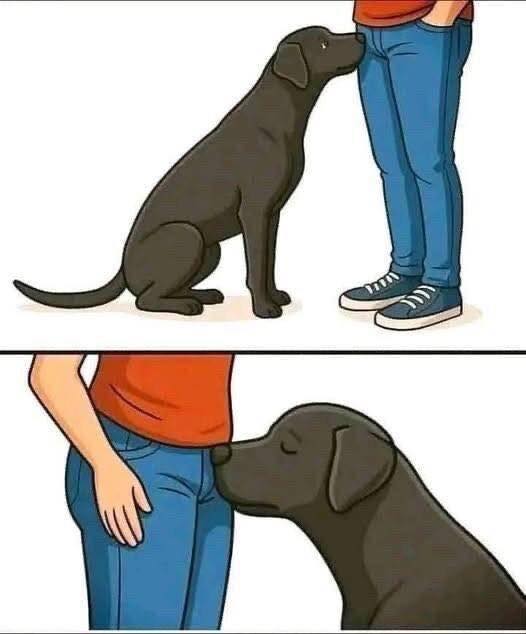
One of the behaviors that often surprises or embarrasses humans is when a dog investigates a person up close—especially near areas we consider private. Though it may feel awkward from a human perspective, this action is simply part of a dog’s natural way of greeting and learning about someone.
Canines have specialized scent glands that allow them to detect subtle chemical signals. Areas of the human body release more concentrated scent information, carrying natural cues that help dogs understand who we are and how we are feeling in that moment.
For them, this isn’t a breach of personal space but a direct and efficient way to gather information, much like humans might rely on facial expressions or conversation when meeting someone new.
It can still catch us off guard. People are raised with clear boundaries regarding personal privacy, while dogs operate from instinct rather than social rules. Their behavior is driven by curiosity, recognition, and connection—not disrespect.
For those who prefer to redirect the behavior, gentle cues such as asking the dog to sit or offering a different form of greeting can create clearer expectations. With patience and repetition, dogs learn what is comfortable for the people around them.
The same extraordinary nose that leads to these curious moments is also responsible for a dog’s remarkable emotional awareness. Dogs are constantly reading subtle changes in our heart rate, breathing patterns, body chemistry, and overall energy.
They can sense stress before we show it, sadness before we say it, and illness before we recognize symptoms ourselves. Their ability to perceive these cues forms the foundation of the quiet comfort they offer in difficult moments.
This deep sensitivity also explains why dogs excel as service and support companions. Many can detect shifts in cortisol, blood sugar, or chemical markers that occur before a medical episode. Others recognize emotional patterns and respond by becoming calmer, more attentive, or more protective.
Their reactions are not random; they adjust their behavior based on what they sense, often long before a human notices anything is wrong. The instincts behind simple sniffing are the same ones that allow them to help people every day.
When viewed from this angle, even the behaviors that make us blush become more meaningful. Dogs use scent to form memories, strengthen bonds, and understand the people closest to them.
A familiar scent provides reassurance, belonging, and emotional connection. When a dog leans in close, it is often their way of saying they recognize you, they care, and they want to understand how you are doing.
This connection runs deeper than simple curiosity. Dogs remain attentive to the smallest changes in our lives. They sense when we’re excited, worried, tired, or unwell.
Their awareness grows from instinct, but the bond that forms is shaped by loyalty and companionship. To a dog, scent is not merely information—it is a language of trust.
Ultimately, the natural sniffing behavior that humans sometimes find uncomfortable is rooted in the same devotion that makes dogs such cherished companions.
Each breath they take is a reminder that they notice us, understand us, and want to stay connected. In their world, scent is memory, reassurance, and love.
When a dog shows interest in us, they are expressing a simple truth: they know us deeply and without judgment, and they remain devoted to that understanding every day.