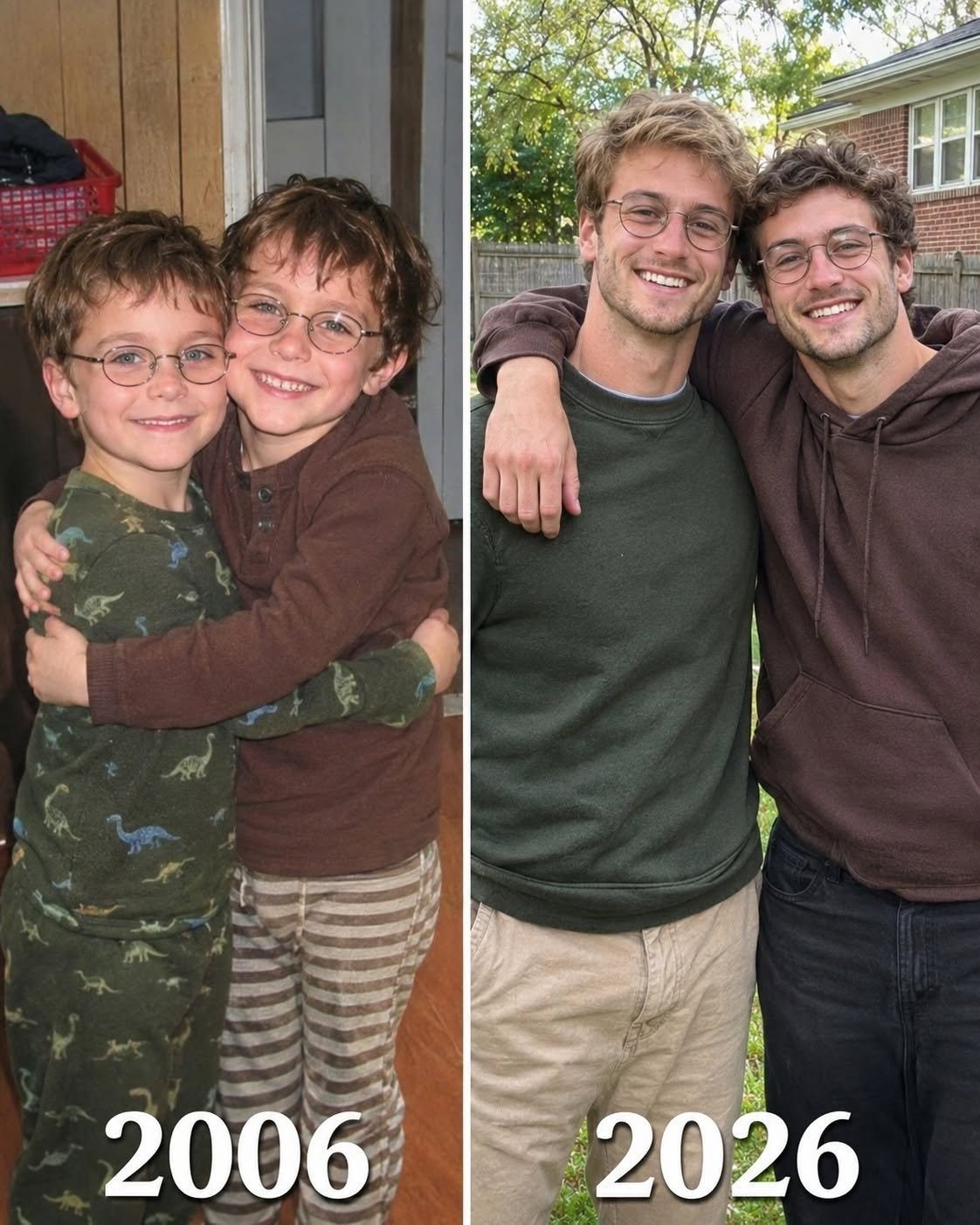
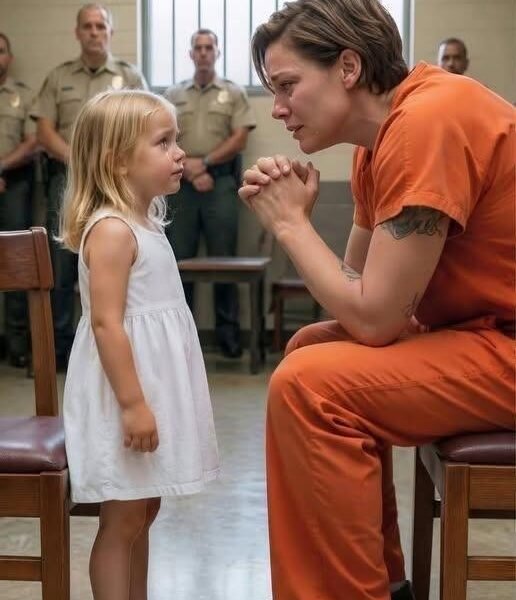
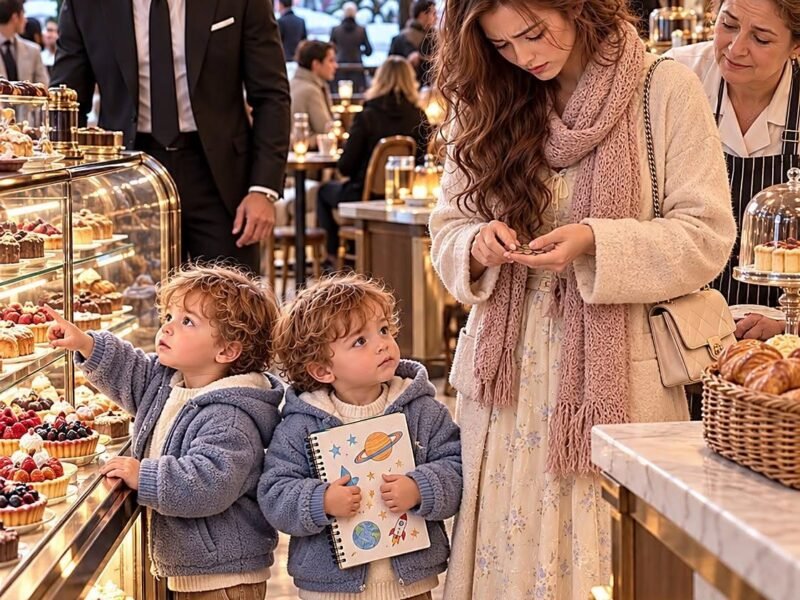
My adoptive mother had always treated my brother and me as though we were a burden, yet I still went to her house carrying birthday flowers. Then I heard her laughing in the kitchen and saying that she had fooled us for 20 years, and in that instant, I knew I was no longer the same person who had walked through the front door.
Advertisements
The drive to Gwendolyn’s house seemed longer than I remembered, with a bouquet of white lilies sitting on the passenger seat like a silent apology. I tightened my grip around the steering wheel and tried to imagine her expression softening when she opened the door, even though two decades of memories told me that probably wouldn’t happen.
Advertisements
Still, I kept driving.
Grant had laughed when I told him what I planned to do that morning.
“You’re seriously going over there? On her birthday?”
“She’s the woman who adopted us, Grant. That has to mean something.”
Advertisements
I didn’t argue with him. My brother had a point.
We were three years old when Gwendolyn and Raymond adopted us. They told us that our biological mother had abandoned us and never came back for us. For years, those words stayed lodged inside me like a tiny piece of ice-cold stone.
Advertisements
Raymond had always tried to make things easier for us. He sat in the front row at every school play, clapping louder than anyone else. He filled our bedroom with toy trucks and bought matching bicycles for us one Christmas.
“You boys are my whole world,” he used to tell us. “Never forget that.”
But Gwendolyn was completely different.
“You should be grateful that we even took you in!” she would snap whenever one of us left a dish in the sink. “Don’t forget you’d be rotting away in an orphanage if it weren’t for us!”
Advertisements
Grant learned to stay silent.
I learned to apologize.
Then, when we were ten years old, Raymond passed away.
After that, the house seemed to lose whatever color it had left. There were no more birthday cakes. No new Christmas toys. The front row at our school events stayed empty.
When Grant and I graduated from high school, I asked Gwendolyn if she would come.
“You’re adults now, Wesley. You’re not my responsibility anymore,” she said.
“It’s only one afternoon, Gwendolyn.”
So we went on without her. We packed our things, started college, and built our careers from the ground up. Grant became an engineer. I went into design. Gwendolyn called maybe twice a year, usually just to remind us of everything she claimed she had sacrificed for us.
Advertisements
And yet, yesterday, I was pulling into her driveway carrying a bouquet of lilies and a wrapped gift box for her 60th birthday.
“Maybe people really do change,” I told myself as I turned off the engine.
I climbed the porch steps. The front door was unlocked. I quietly stepped inside, slipping off my shoes the same way Gwendolyn had trained us to do when we were little boys.
Advertisements
I raised the bouquet, ready to call out and surprise her, completely unaware that the next 60 seconds would destroy everything I thought I knew about my own life.
Then I heard voices coming from the kitchen. One belonged to Gwendolyn. The other was someone I knew immediately.
It was Grandma Opal, Gwendolyn’s mother.
“They still don’t suspect anything, Mom. Twenty years, and they ALWAYS believed everything I told them.”
Advertisements
PART 2: THE SECRET IN THE KITCHEN
I immediately pressed my back flat against the hallway wall beside the kitchen doorway, holding my breath so I would not make a sound.
“They were just innocent children, Gwendolyn,” Grandma Opal said softly, her voice trembling with age and deep guilt. “You really should not speak about your own nephews with so much contempt.”
“Children eventually grow up into naive men,” Gwendolyn continued carelessly as the metallic scrape of a knife cutting through birthday cake echoed through the room. “They never bothered to ask a single real question about the past, so everything went exactly according to my plan.”
I stood completely frozen in the dim hallway as the sound of a teacup clinking against a saucer followed her harsh words.
PART 3: FINAL
I should have walked out. A smarter man would have gone back to his car, called his brother, and figured out what to do with the next hour.
But my legs had other plans. I stepped into the kitchen doorway with the lilies still in my hand.
Gwendolyn was standing at the counter in her good blue cardigan, a slice of cake on a plate in front of her. Grandma Opal sat at the table, her hands knotted together, her eyes red-rimmed. They both looked up at the same time.
The knife in Gwendolyn’s hand stopped moving.
“Wesley,” she said. “You’re early.”
“Your nephews,” I said.
Nobody moved.
“You said nephews, Gwendolyn. Not ‘the boys I adopted.’ Nephews.” My voice sounded strange to me, flat and very calm. “I’d like to know whose children Grant and I are.”
She put the knife down slowly. For a moment I thought she might deny it, and I saw her consider it. Then she glanced at her mother, who was already crying, and her face closed up like a door.
“Sit down,” she said.
“I’ll stand.”
“Suit yourself.” She picked up her tea. “Your mother was my younger sister. Marianne.”
The word landed in the room like a dropped plate. I had never heard it spoken in that house.
“She was twenty-four when she had you two,” Gwendolyn continued, in the tone of someone reading a grocery list. “No husband. No money. She was drinking by the time you were two. She’d leave you in the apartment for hours while she went out. Raymond and I took you in because somebody had to.”
“You told us she abandoned us.”
“She did.”
“Marianne,” Grandma Opal whispered, “went to treatment, Gwen. You know she did.”
“Mother.”
“She went to treatment. Eleven months, and she came back, and you told her the court had already finalized it.”
The silence that followed was so complete that I could hear the clock over the stove.
“Finalized what?” I asked.
Nobody answered, so Grandma Opal did.
“When Marianne checked herself into the program, she signed temporary guardianship papers so Gwendolyn and Raymond could care for you boys. Temporary, Wesley. Ninety days, renewable. Her treatment ran long, and your aunt…” She stopped and pressed a tissue to her mouth. “Your aunt filed for adoption while Marianne was away. She told the court your mother couldn’t be located.”
“She could’ve been located!” I said. “She was in a facility two hours away!”
“The court didn’t ask hard enough,” Gwendolyn said coolly. “That’s not my fault.”
I turned to her. “Why?”
“Why what?”
“Why would you do that to your own sister?”
For the first time, something flickered in her face. It wasn’t guilt. It was older and uglier, and it had been fed for years.
“Because Marianne got everything,” she said. “She was the pretty one. Mother’s favorite. Dad left her the lake house in his will because she was the baby, and I was supposed to just accept that. I did everything right. I married a good man, I kept a clean house, and Raymond and I couldn’t have children.” She said the last four words like they were a bill someone had refused to pay. “And Marianne got pregnant by accident, twice, and threw it away.”
“So you took us.”
“I took what was owed to me.”
I felt Grant’s name rise in my throat. I wanted him there, and I also didn’t. I wasn’t sure what I would do with the rage once it had somewhere to land.
“Raymond,” I said. “Did he know?”
Gwendolyn’s mouth thinned. “Raymond believed what I told him.”
“Raymond loved us,” I said.
“Raymond was a soft man.” She lifted her chin. “He wanted to tell you boys the truth when you turned ten. He had a whole speech planned. He had a heart attack in the garage the week before.”
Grandma Opal let out a small broken sound.
I looked at the woman I had carried flowers to, the woman who had spent twenty years telling two little boys they should be grateful, and I understood something very simply: she had never once thought she was the villain. In her version, she was the injured party. She always had been.
“I’m leaving,” I said.
“You’re being dramatic.”
“Where is she?”
“I wouldn’t know.”
“Gwendolyn.” Grandma Opal stood up, one hand braced on the table. She was eighty-four, and I had never in my life seen her raise her voice. “Tell him where she is, or I will.”
“Mother, sit down.”
“No.” Her voice shook but held. “I let you do this once. I stood in the courthouse hallway and said nothing. I am not doing it again.”
She turned to me, and her eyes were wet and fierce.
“She lives in Duluth, Wesley. She runs a small bakery. She has twelve years sober. Every year on your birthday, she mails you boys a card care of this address.”
“Cards,” I repeated.
Grandma Opal looked at her daughter, and Gwendolyn, for the first time that afternoon, looked away.
“There’s a shoebox,” Grandma Opal said quietly. “In the hall closet. Top shelf, behind the winter blankets.”
I don’t remember walking to the closet. I remember reaching up, and the feel of the cardboard under my fingers, and how light it was.
I took it down and opened the lid.
Envelopes. Dozens of them, each addressed in the same looping blue handwriting. To Wesley and Grant. Not one had been opened. Some of the early ones were faded pink, the postmarks smudged with age.
I stood there in the hallway, holding twenty years of birthdays in a shoebox, and I started to shake.
Behind me, in the kitchen, Gwendolyn said, “Put those back.”
I didn’t turn around.
“Put them back, Wesley. They’re mine. They came to my house.”
“They came to my name,” I said.
I walked to the front door. I put on my shoes. I left the lilies on the hall table, still wrapped in their cellophane, and I took the shoebox out into the afternoon sun.
Grant didn’t say anything for a long time.
We were sitting at his kitchen table that evening with the box between us. I had read the first letter out loud, my voice cracking on the second line, and then I had stopped, because I couldn’t continue.
Dear Wesley and Grant. Today you’re four. I hope someone made you a cake. I hope you have a bicycle. I’m getting better. I think about you every hour. I’m so sorry that I’m not there. Please know that I am trying to come home.
Grant picked up the next envelope, then the next. He read in silence, his jaw working, until he got to one from the year we turned fourteen.
I called the house today. Your aunt told me you didn’t want to speak to me. If that’s true, I will respect it. But if she’s lying, boys, I need you to know that I will never stop writing.
He set it down, pressed the heels of his hands to his eyes, and said, in a voice I barely recognized, “She never stopped.”
“No.”
“I told myself I didn’t care.” He let out a shaky laugh. “I told myself I didn’t care so many times that I started to believe it.”
“I know.”
“Twenty years, Wes.”
“I know.”
He lowered his hands. His eyes were red, and he looked suddenly much younger, like the quiet kid who used to sit on the bottom bunk with a flashlight so I wouldn’t be afraid of the dark.
“We’re going to Duluth,” he said.
“Tomorrow?”
“Tonight, if you’ll drive.”
We got there a little after midnight and slept in a motel off the highway, if you can call it sleeping. At nine the next morning, we stood outside a small brick storefront with a hand-painted sign that read MARIANNE’S BAKERY, and a handwritten card in the door that said Back in ten minutes.
Grant took a long breath. “What if she doesn’t want us?”
“Then we’ll have asked.”
“What if she does?”
I didn’t have an answer for that one.
A woman came around the corner a few minutes later with a bag of flour on her hip. Silver was threaded through her dark hair, and she was smaller than I had imagined. She had Grant’s eyes and my mouth.
She saw us and stopped dead.
The flour slid from her arm and hit the sidewalk with a soft thump, a white cloud rising around her shoes.
Nobody spoke.
“You grew up,” she said finally. It came out as a whisper, like she’d been rehearsing it for twenty years and had still gotten it wrong.
“Hi, Mom,” Grant said.
I would like to tell you that I said something brilliant. I didn’t. I crossed the sidewalk in three steps and wrapped my arms around her, and she held on to my jacket like she was afraid I would dissolve, and somewhere behind me I heard my brother start to cry.
It took months to untangle the rest.
We hired an attorney, Ms. Lindqvist, who spent a week with the old court files and came back with her mouth set in a hard line. The adoption petition had said Marianne’s whereabouts were “unknown.” The only attempt at notice was a single letter sent to an old apartment she had vacated years earlier. That letter was never answered, and that was enough for a judge in a hurry.
“There are grounds to challenge this,” Ms. Lindqvist told us. “Fraud on the court, at minimum. But you two are adults now, so there’s no custody question. What you’re really asking for is accountability and, if you want it, a legal acknowledgment of what happened.”
“What does that mean?” Grant asked.
“It means we can put the truth on the record.”
We did.
Gwendolyn fought it at first. Then her own attorney read the shoebox letters, the returned mail, and the notes in Grandma Opal’s own handwriting, which she had written and dated years ago and kept hidden in her Bible. Opal also agreed to give a sworn statement, and that, I think, is what broke her.
There was no dramatic courtroom scene. A judge reviewed the evidence, found that the original petition had been obtained through misrepresentation, and set the adoption aside. It was a piece of paper, but it meant my birth certificate would show the name of the woman who actually raised her sons, even if she had done it from two hours away, in the dark, with an unopened mailbox.
Gwendolyn was ordered to pay restitution for the years of concealed mail and for a portion of the lake house trust she had quietly drawn on in Marianne’s name. She sold the house to cover it. She did not apologize. I stopped waiting for her to.
Grandma Opal moved in with Marianne that spring. The two of them shared the apartment above the bakery, and every Sunday, Opal sat in the corner of the shop with a cup of tea, watching her youngest daughter laugh with customers, and she cried a little each time. Marianne never told her to stop.
One year to the day after I walked into Gwendolyn’s hallway, Grant and I sat on the back steps of the bakery, eating day-old cinnamon rolls out of a paper bag.
“I keep thinking about Raymond,” I said.
“Yeah.”
“He was going to tell us. He had a whole speech.”
“I know.” Grant took a bite and chewed for a while. “I think he’d be glad we found her.”
“I think he’d be glad you found her. I just dragged you to Duluth.”
He elbowed me. “You carried a bouquet of lilies to the woman who ruined our childhood. Let’s not pretend you’re a genius.”
I laughed so hard that I nearly dropped my roll.
Inside, Marianne called out that someone needed help carrying a tray, and we both stood up at once, the way brothers do. She met us at the door with flour on her cheek and a tray of warm bread in her arms.
“Boys,” she said. It still caught in her throat every single time. “Thank you.”
“For what?” Grant asked.
“For coming.”
I looked at her face, my mouth, his eyes, all of it stitched together into one woman I had spent twenty years not knowing, and I understood that I had come to the wrong house on my adoptive mother’s birthday and walked straight into the right one.
I took the tray from her hands.
“We’re not going anywhere,” I said.
And for the first time in my whole life, I knew exactly which door I was walking through.