There is a fear that many people carry quietly throughout life. It is not the fear of poverty, nor even the fear of death. It is the fear of growing old and suddenly realizing that life was not lived in a meaningful or peaceful way. Not because of a lack of success or wealth, but because something inside feels unfinished—without purpose, without harmony, without inner stability.
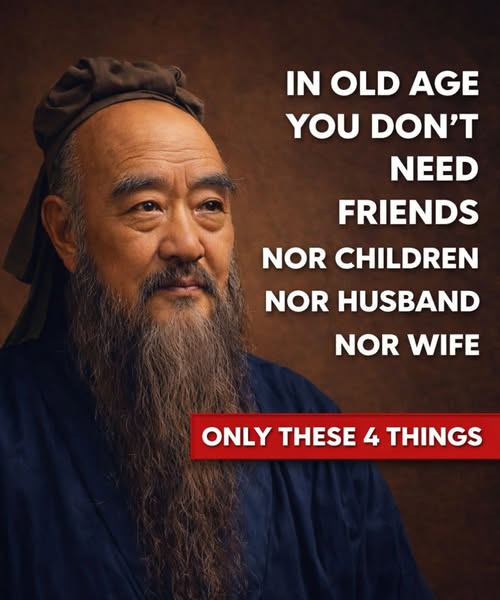
More than 2,500 years ago, the Chinese philosopher Confucius deeply reflected on this very human concern. His teachings were not only about happiness in old age. He offered something much greater: guidance on how to live so that old age becomes the natural, rewarding result of a life lived with honesty, clarity, and balance.
For Confucius, old age was not a decline. It was a mirror. It reflects everything a person has planted in their heart, their choices, and their relationships.
From his wisdom, four essential principles emerge—principles that can help build a fuller, more peaceful old age.
1. Personal Dignity: The Foundation of a Peaceful Old Age
Confucius believed that a truly noble person never loses their self-respect, even if life takes away everything else. Many people compromise their values to stay comfortable, avoid conflict, or please others. In the moment, these choices may seem harmless. But over the years, living against one’s own truth creates a quiet inner wound.
A calm and balanced old age is built on quiet dignity—not loud pride, not arrogance, not an obsession with reputation. It is the simple ability to look back and feel at peace with who you were. To acknowledge mistakes without drowning in regret. To know that your caution came from wisdom, not fear.
“Quiet dignity is the foundation of a peaceful and balanced old age.”
Those who protect their dignity throughout life grow old with grace. Their presence brings calm, even when they say nothing at all.
2. Our Relationship with Time: Learning to Live in the Present
Another key teaching from Confucius is the understanding of time. Many people move through life stuck in the past or anxious about the future. Youth is spent waiting, adulthood is rushed, and old age becomes filled with regret.
True peace belongs to those who learned to live fully in the present moment.

This is not about chasing pleasure. It is about cultivating awareness—being awake in your own life. It means:
- listening with full attention
- valuing small, ordinary moments
- being emotionally present with loved ones
- enjoying life as it unfolds
“True peace comes from living fully in the present moment.”
Modern psychology confirms this ancient idea: people who lived with presence experience less emptiness in old age. Their memories become treasures, not sources of regret.
3. Human Relationships: Our True Wealth
Confucius taught that no human being exists by themselves. Our relationships shape our emotional life, our peace, and our sense of belonging. Unfortunately, many older adults suffer not only from loneliness but from unresolved relationships—words unspoken, apologies never made, wounds left to harden.
A harmonious old age is found by those who learned to care for relationships with balance and respect—not self-sacrifice that destroys them, and not pride that creates distance.
Healthy relationships are built by:
Harmony begins in the home and spreads outward. People who live in constant conflict often carry bitterness into old age. Those who practice forgiveness—imperfect but sincere—enter old age with acceptance and emotional freedom.
4. Life’s Meaning: Leaving More Than Memories
The deepest principle from Confucius is the search for purpose. Meaning is not always found in great achievements. It is found in what we leave behind in the hearts and lives of others. It is found in creating:
A person who understands their purpose does not fear aging. They do not cling desperately to youth or envy those who are younger. They become a source of wisdom and support. Old age becomes not an ending but a quiet fulfillment.
“Healthy relationships are the true wealth we carry into old age.”
A Silent Lesson: Stop Negotiating with Life
Many people fall into the habit of treating life like a contract:
“I’ll sacrifice now, and someday life will reward me.”
“I’ll give up what I want, and eventually everything will make sense.”
This bargaining often leads to disappointment.
Confucius suggested something different: live in alignment with your true self without expecting compensation from fate. Modern psychology calls this an “internal locus of control.” Philosophy calls it maturity.
Real well-being depends on one thing: our relationship with our lived experiences, not external circumstances.
The Truth About Aging
- Old age does not create character—it reveals it.
- If you lived with gratitude, old age deepens it.
- If you lived with resentment, old age magnifies it.
- If you cultivated wisdom, old age illuminates it.
- If you carried chaos inside, old age exposes it.
This is why Confucius emphasized daily inner work. Those who grow internally in youth find rest in old age. Those who avoid it face it later—when strength is limited.
Practical Reflections
- Protect your values, even in small choices—dignity grows step by step.
- Practice being present in simple moments.
- Resolve conflicts early to prevent emotional burdens in the future.
- Choose meaningful activities, not just obligations.
- Learn to enjoy your own company; build your inner world.
- View mistakes as teachers, not permanent failures.
- Cultivate gratitude every day—it is an investment in your emotional future.
A fulfilling old age does not depend on luck or a perfect life. It grows from inner coherence—from living in alignment with your values, your relationships, your time, and your purpose.
Those who learn to respect themselves, nurture their bonds, value their time, and live with meaning do not fear aging. Every stage of life simply becomes a natural continuation of their own path.