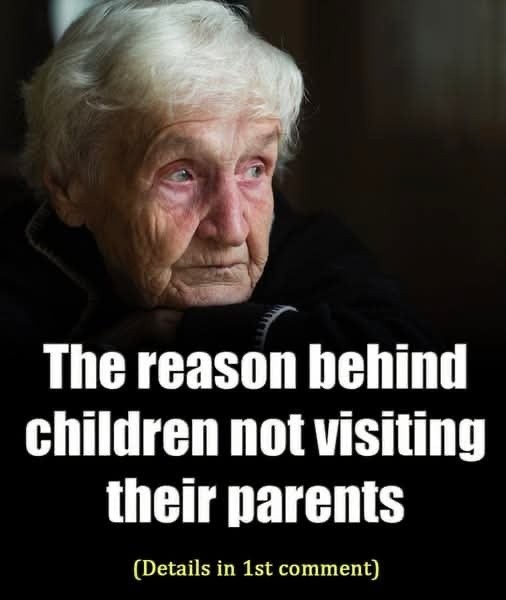
I’m sure no adult just wakes up one morning and decides to write off their parents. Anyone who has made that decision probably knows how hard it was to make. But research consistently shows that a sizeable share of adult children will become estranged from a parent at some point.
It tends to happen more often with fathers than mothers, usually by the time the child reaches their mid-20s. The problem is that most parents say they had no idea it was coming. Their children say the signs were there for years.
That disconnect is what makes resolution so hard, because one side can’t see what the other has been living with. If you’re going through this or know someone who is, here are 16 of the most common reasons adult children stop visiting their parents.
Every Visit Feels Like a Performance Review
Joshua Coleman, a psychologist who has spent decades counseling estranged families, sees one complaint come up more than any other. Adult children say every visit home turns into an evaluation. Their parents comment on their weight, their career, their parenting, and their partner, and frame all of it as concern.
But what the adult child hears is a running list of everything they’re doing wrong. Coleman wrote about this in a 2021 Atlantic essay, arguing that most parents genuinely believe they’re being helpful. That belief is what makes the problem so resistant to change. The child keeps showing up, hoping it will be different this time, until one day they just stop.

Guilt as a Strategy Backfires
Some parents don’t ask their children to visit; they make their children feel bad for not visiting. Using phrases like “I won’t be around forever,” or “other people’s children visit every week,” or “I guess I’ll just sit here alone then.” These phrases try to pull the child closer through obligation, but they do the opposite.
The child starts linking visits with emotional pressure instead of connection, and that feeling builds the more it happens. Guilt tripping may work once or twice, but over time, it rewires how the child feels about the relationship itself. Something that should feel like home starts feeling like a debt they can never pay off.
Boundaries Get Ignored
When a child becomes an adult, some parents struggle to make that adjustment. They still see themselves as the authority. They treat their adult child’s boundaries the way they would have treated a teenager’s pushback, as something to override. The adult child asks them to stop commenting on their marriage, to call before showing up, and to stop discussing their salary with relatives.

The parent dismisses the request or treats it as an overreaction, and sometimes they comply for a week before going right back. Eventually, the adult child learns that no matter how clearly they communicate a limit, it won’t matter. The only boundary the parent honors is the one they can’t talk their way around.
Money Comes With Strings Attached
Money is a source of stress in most of our lives. Adult children who have parents willing to help carry some of that weight sometimes find that the help comes with conditions. A parent offers to cover a down payment or help with a big expense, and from their side, it feels like love, like they’re still doing their job.

But when the parent uses it to justify opinions about how the child should live, or brings it up during arguments, the gift stops feeling like a gift. It starts feeling like a contract the child never agreed to.
The Relationship Is Frozen in Time
Imagine being 40 with a mortgage, a career, and kids of your own, but the moment you walk through your parents’ door, they treat you like you’re 14 again. That’s what many estranged adult children say they’ve gone through. The parent dismisses their opinions, talks over their experience, and never really makes the shift from authority figure to something closer to a peer.
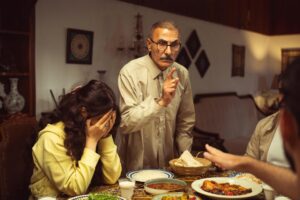
Outside of the family home, these children have friendships built on curiosity and mutual respect, where people take their thoughts seriously and treat their independence as a given. And every visit home reminds them of what that contrast actually feels like.