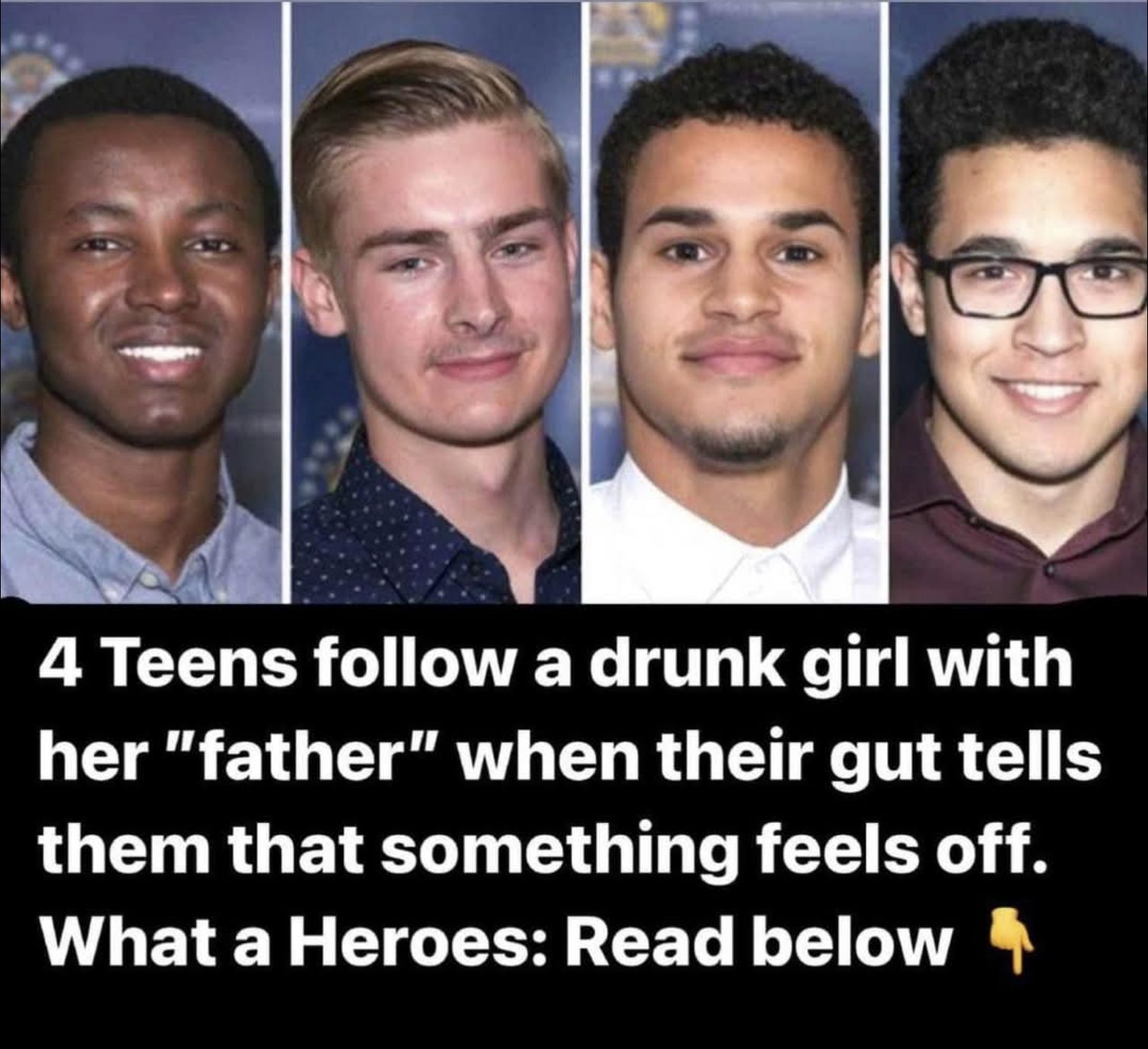
Late one night in downtown Calgary, when most of the city was winding down and streets felt less forgiving, four teenage friends were doing what they always did—skateboarding, laughing, and talking about nothing in particular.
Kyle Tenove, Warren Churchill, Clay Stein, and Josh Hunter had no idea that within minutes, their casual night would turn into a moment that tested their instincts and character. As they rolled through the area, something caught their attention: a young woman walking alone, visibly distressed, with an aggressive man hovering far too close. The unease in her body language was unmistakable. She wasn’t laughing, wasn’t relaxed, and wasn’t safe. The boys slowed, watching as the man tried to steer her toward a nearby alley, his behavior growing more forceful by the second.
What happened next was not planned or heroic in the dramatic sense—it was instinctive. The four skateboarders exchanged looks and made a decision without words. They stepped in. Not with violence, not with bravado, but with presence. They placed themselves between the man and the woman, speaking firmly, refusing to back down, making it clear she was no longer alone.
The sudden shift in numbers and attention was enough. The man retreated and fled into the night, abandoning his attempt. The danger didn’t end there, though. The woman was shaken, intoxicated, and vulnerable, and the teens understood that stopping the threat wasn’t the same as ensuring her safety.
Instead of skating away once the immediate risk passed, the four friends stayed. They kept the woman with them, offered reassurance, and contacted authorities, remaining by her side until police arrived. It was a quiet act of responsibility, one that didn’t seek recognition or praise. Later, police would acknowledge that their intervention likely prevented a far more serious outcome.
In a situation where hesitation or indifference could have changed everything, these teenagers chose awareness and action. Their maturity stood out—not because they were trained or obligated, but because they cared enough to step up when it mattered.
A year after the incident, the Calgary Police Service formally honored the four young men with the Chief’s Award for Bravery, a distinction reserved for civilians who demonstrate exceptional courage and selflessness. The recognition wasn’t just about what they did—it was about what their actions represented.
In a world where bystanders often look away, these skateboarders proved that ordinary people can interrupt harm simply by refusing to ignore it. Their story became a powerful reminder that courage doesn’t always arrive wearing a uniform or carrying authority. Sometimes, it rolls in on four skateboards, late at night, guided only by empathy, awareness, and the decision to protect someone who cannot protect themselves in that moment.