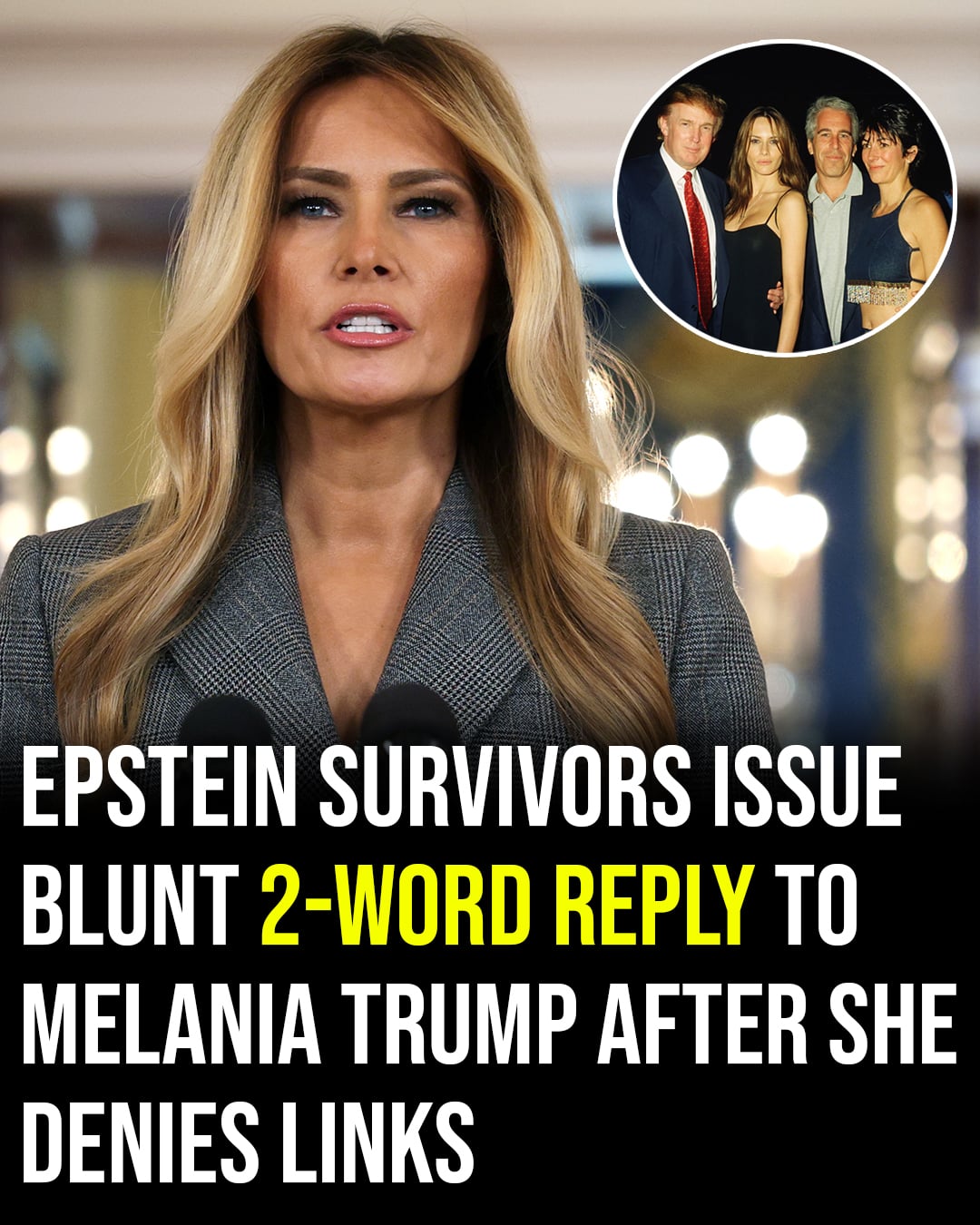
In her carefully worded statement, Melania Trump tried to draw a clear line: she briefly crossed paths with Jeffrey Epstein decades ago, was never abused, never involved, and believes the accusations linking her to him are politically motivated.
She went further, urging Congress to let every survivor testify publicly under oath, insisting that only then would “the truth” be known and preserved in the congressional record.
To some, it sounded like a call for transparency; to many survivors, it sounded like another demand for them to bleed in public.
The joint letter from more than a dozen Epstein survivors laid bare that anger. They reminded the world that they have already filed reports, relived trauma in courtrooms, and endured intense scrutiny.
Asking them to step forward again, they argued, shifts the burden away from institutions that hid files, exposed identities, and protected power.

Their message was stark: survivors have carried this weight long enough. Now the responsibility belongs to those who failed them.