The Alcatraz Escape — What Was Proven, and What Remains Unanswered
The escape from Alcatraz Federal Penitentiary in June 1962 still holds a strange place in history. It is remembered not only for what was done, but for what was never fully resolved.
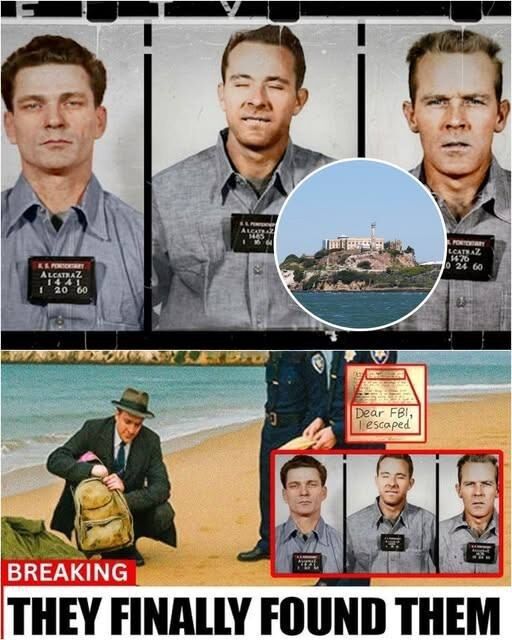
Three inmates—Frank Morris and brothers John Anglin and Clarence Anglin—left a prison designed to prevent exactly that.
Whether they made it beyond the water is the part no one can say with certainty.
A Plan Built Slowly
Life inside Alcatraz was controlled, rigid, and meant to remove opportunity.
But control doesn’t erase patience.
Over months, the men worked quietly—using small, ordinary tools to widen openings behind their cells. They covered their progress carefully, making sure nothing appeared out of place.
Even their absence was planned.
Dummy heads were placed in their beds, shaped and painted just enough to pass a glance.
Nothing about the plan relied on speed.
It relied on discipline.
The Night They Left
On June 11, they moved.
Through the openings they had created, up through areas not meant for passage, and eventually toward the shoreline.
There, they launched a raft made from raincoats—something fragile by appearance, but carefully assembled.
Then they entered the bay.
Cold water. Strong currents. Darkness.
After that, there were no confirmed sightings.
What Was Found — and What Wasn’t
By morning, the cells were empty.
The search began immediately—boats, aircraft, teams covering land and water.
Some items were recovered.
But not the men.
No bodies were ever found.
And that absence has carried the story forward ever since.
The Space Between Evidence and Conclusion
Officially, the conclusion was that they likely drowned.
Given the conditions, that remains a reasonable assessment.
But certainty requires proof.
And in this case, proof never arrived.
So the story stays open.
Why the Question Remains
Over time, different pieces have surfaced—letters, photographs, analyses.
None confirmed.
None fully dismissed.
Each one adds possibility without closing the question.
And that is why the story continues.
Not because it was the most dramatic escape.
But because it was never completed in the record.
Final Thought
Some events end with answers.
Others end with silence.
In that silence, people tend to fill the space—sometimes with hope, sometimes with realism.
What matters is recognizing the difference between what is known and what is assumed.
Because the escape itself was real.
What happened after—that remains uncertain.