Education is a topic that sparks strong opinions from almost everyone. Whether it is about childcare, school systems, or teaching methods, people care deeply because education shapes the future. The early years of a child’s life build not only academic skills but also emotional, social, and moral foundations that influence adulthood.
Because of this, conversations about schooling often grow intense. Parents want the best for their children, and when the system seems to fall short, concerns and frustrations naturally arise. However, while many people critique schools and teachers, the most meaningful insights often come from those who have spent years inside the classroom.
One such voice is Lisa Roberson, a retired teacher whose candid thoughts about education went viral after she wrote an open letter in 2017. Published in The Augusta Chronicle, her letter spread across social media and sparked national conversations about responsibility, discipline, and the challenges facing public schools.
“Retired teacher Lisa Roberson writing the open letter that would spark a national conversation on parental responsibility and education.”
At the heart of Roberson’s message is a bold idea: schools are not failing because of teachers alone. She argues that many educational problems stem from a lack of parental involvement and student preparedness. Her letter challenges the common narrative that teachers are to blame for poor academic outcomes and encourages families to examine their own role in the learning process.
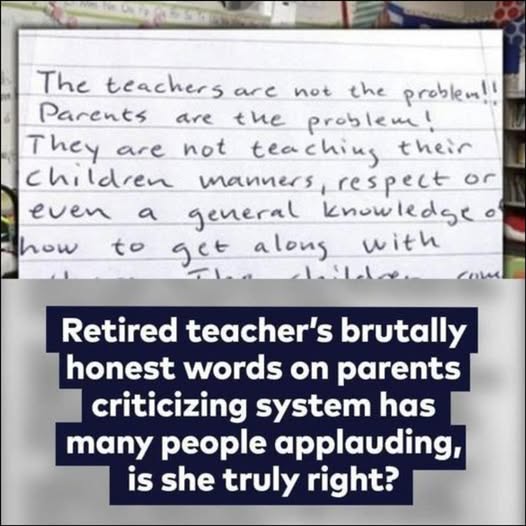
Roberson begins her letter with a clear statement: “As a retired teacher, I am sick of people who know nothing about public schools or have not been in a classroom recently deciding how to fix our education system.” Her decades of classroom experience give her words authority and weight.
She continues with one of her most quoted lines: “The teachers are not the problem! Parents are the problem!” Roberson describes students arriving at school with expensive shoes or gadgets but lacking essential supplies like pencils or notebooks. Teachers often provide these items themselves, highlighting the gap between student needs and parental support.

Her intention is not to criticize for the sake of criticism but to shed light on a reality many educators face daily: teachers cannot compensate entirely for the absence of parental guidance. For children to succeed, parents must take an active role by attending school events, communicating with teachers, ensuring homework is completed, and teaching respect and responsibility at home.
“A realistic look inside today’s classrooms, where teachers balance instruction with the challenges created by unprepared students.”
Roberson also addresses student accountability. She questions whether students participate in class, complete assignments, and contribute positively to the learning environment. Her message makes it clear that education is a shared responsibility between teachers, parents, and students.
The letter, originally shared by journalist Tony Flowers, gained widespread attention because it touched on issues that remain relevant today. Some parents agreed wholeheartedly, while others pointed to systemic factors such as underfunded schools and economic inequality. These responses highlight the complexity of educational challenges, yet Roberson’s core argument remains powerful: parental involvement matters deeply.
Her message became even more significant during the COVID-19 pandemic, when families were suddenly heavily involved in remote and hybrid learning. The experience underscored just how essential parental support is to a child’s academic and emotional success.
“A constructive parent–teacher meeting reflecting the shared responsibility required for a child’s academic success.”
Ultimately, Roberson’s letter is more than a critique—it is a call to action. It reminds us that education works best when teachers and parents collaborate, communicate, and share responsibility for a child’s growth. Children thrive when adults show up, stay engaged, and reinforce good habits at home.
Roberson’s words continue to resonate because they speak to a timeless truth: raising and educating children is a collective effort. When parents, teachers, and society work together, the path to a better educational future becomes much clearer.